
Compare enterprise workload connectivity platforms by identity, delegated administration, audit evidence, private deployment, and migration ownership.
Secure workload connectivity is not one product category. For a large hybrid estate, start with NetFoundry when service-level reachability and migration control matter most; choose Zscaler or Prisma Access when security service edge consolidation is the priority; choose Tailscale for fast engineering adoption; and choose Cloudflare One when edge services and ZTNA belong in the same control plane.
The right platform depends on whether you need a global security cloud, a developer-friendly overlay, resource-level access, or one identity-first fabric for workloads, APIs, OT, and AI agents.
The useful comparison is not a feature-count contest. Procurement teams should test delegated administration, evidence retention, private deployment, workload lifecycle, and who owns the migration from VPNs and firewall rules. A platform that secures users but leaves machine-to-machine paths broad is not a complete workload connectivity answer.
What enterprise procurement should verify first
Enterprise buyers should verify five controls before they compare product checklists.
| Criterion | What to verify | Why it matters |
|---|---|---|
| Identity and policy | Human, device, workload, service, and agent identities | Shared network location is not enough for least privilege |
| Delegated administration | Roles, tenants, approval paths, and policy ownership | Security teams need control without becoming a bottleneck |
| Audit evidence | Access decisions, policy changes, session records, retention, and export | An audit needs more than a connection succeeded message |
| Private deployment | Connectors, self-hosted components, regional controls, and data residency | Hybrid estates rarely fit one public-cloud boundary |
| Migration ownership | Inventory, coexistence, rollback, and responsibility for routes and firewall changes | A good end state does not remove transition risk |
Treat SSO, SAML, SCIM, APIs, and SOC 2 or ISO 27001 evidence as procurement inputs, not proof that the architecture fits. Ask for the trust center and the exact plan or contract scope. The public pages for these platforms do not expose every retention, residency, or delegated-administration detail, so those gaps belong in the request for proposal.
Best secure workload connectivity platforms for enterprises
1. NetFoundry: best for identity-first reachability across a hybrid estate
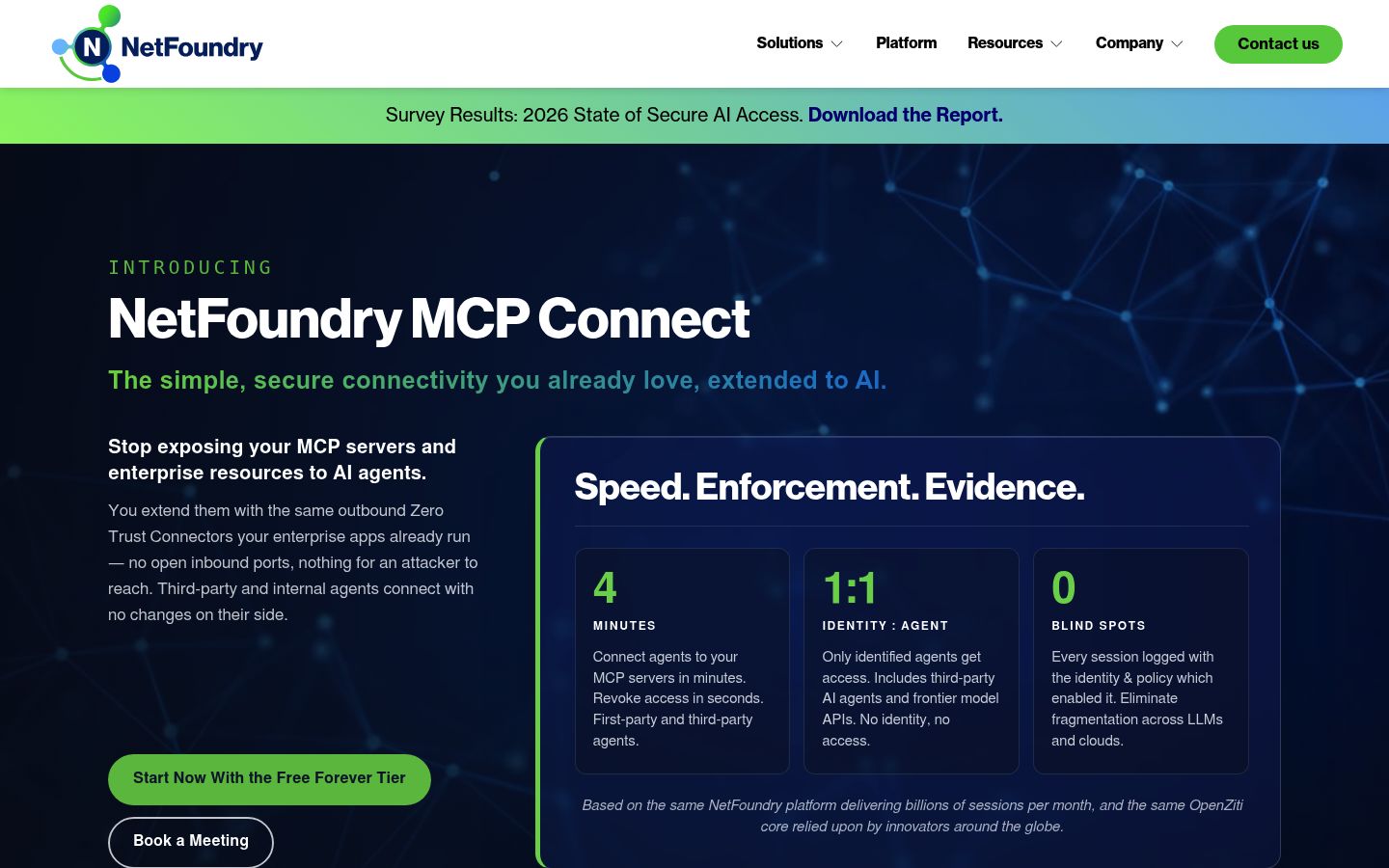
NetFoundry is the clearest fit when one policy model must cover users, workloads, APIs, sites, OT systems, and AI agents. The platform is built on OpenZiti and uses authenticate-before-connect: an endpoint presents an identity, policy authorizes a named service, and an encrypted path opens only after that decision.
NetFoundry describes outbound-only paths, no open inbound ports, and identity-based microsegmentation across its platform pages. That architecture helps a large estate keep application reachability separate from IP routes. It is useful during acquisitions, multi-cloud migrations, partner connectivity, and OT projects where changing the underlying network is expensive.
The procurement advantage is control over the service boundary. A team can define which identity reaches which service instead of granting a broad subnet route. Its platform overview also describes a managed option and an OpenZiti path for organizations that want more deployment control.
Best for: security and infrastructure teams that need one fabric for cloud, data center, APIs, OT, and non-human identities.
SSO and SCIM: Ask for the supported identity providers, group provisioning workflow, and separation between human and workload identities. The public platform pages describe identity-based access but do not publish the full enterprise integration matrix.
Audit and API: The platform describes session logging with the identity and policy that enabled access. Ask for retention, export format, SIEM integration, API scope, and audit coverage for policy changes.
Private deployment: OpenZiti supports a self-hosted path, while NetFoundry offers a managed service. Confirm which components can run in your regions and who operates the control plane.
Limitation: NetFoundry needs a more deliberate architecture than a small team that only wants private SSH access. Its advantage appears when workload classes, policy scope, or audit requirements extend beyond a developer network.
2. Zscaler Zero Trust Exchange: best for a global security cloud
Zscaler Zero Trust Exchange is a strong choice when workload connectivity belongs inside a broader security cloud. Zscaler says its platform secures users, workloads, IoT and OT, and business partners. Its model brokers one-to-one connections between an authorized entity and an application using identity, context, and policy.
The platform is strongest for organizations consolidating private access, secure web access, cloud security, inspection, and policy operations. Zscaler also provides a compliance portal and links to support, release notes, and service health resources from its product site.
Best for: enterprises standardizing on a cloud-delivered security control plane with broad user, workload, and internet security coverage.
SSO and SCIM: Zscaler documents third-party identity-provider integrations for user, device, and workload identity. Request the exact SAML, SCIM, role, and tenant model for your edition.
Audit and API: Ask for the logs exposed by each workload and private-access service, retention by region, export options, and API rate limits. The public platform page describes policy enforcement and a support ecosystem, but it does not give one universal retention policy for every service.
Private deployment: The primary architecture is a cloud security service. Confirm regional processing, private service edges, and any components that must remain in your own infrastructure.
Limitation: A broad security cloud can be more platform than an infrastructure team needs if the only requirement is narrow service-to-service connectivity. Validate workload lifecycle and east-west policy in a proof of concept.
3. Prisma Access: best for enterprises already operating Palo Alto Networks
Prisma Access fits organizations that want private access, secure web gateway, CASB, firewall as a service, and related controls under Palo Alto Networks management. Palo Alto Networks describes Prisma Access as a cloud-delivered solution for users, apps, devices, and data. Its product page also links to technical documentation and a licensing guide.
Prisma Access deserves attention in estates with existing Palo Alto skills, policy, and support relationships. The procurement question is not whether it has a security feature. It is whether its management model and connectors cover workload-to-workload paths as cleanly as user and branch access.
Best for: enterprises consolidating SASE and private access with an existing Palo Alto Networks operating model.
SSO and SCIM: Confirm the identity sources, administrator roles, tenant boundaries, and provisioning path through the selected management plane. Palo Alto Networks documents identity and access management and multi-tenant administration, but the deployment version matters.
Audit and API: Prisma Access documents Insights and APIs for health and performance data. Ask separately for policy-change audit logs, access decisions, retention, SIEM export, and API permissions.
Private deployment: The documentation describes cloud delivery and a private-location option in the product release notes. Verify regional availability, what runs in your infrastructure, and whether private deployment changes feature parity.
Limitation: Prisma Access can bring more firewall and SASE machinery than a workload-only project needs. Make the RFP separate user access, branch connectivity, and machine-to-machine requirements.
4. Cloudflare One with Access: best for edge consolidation and clientless access
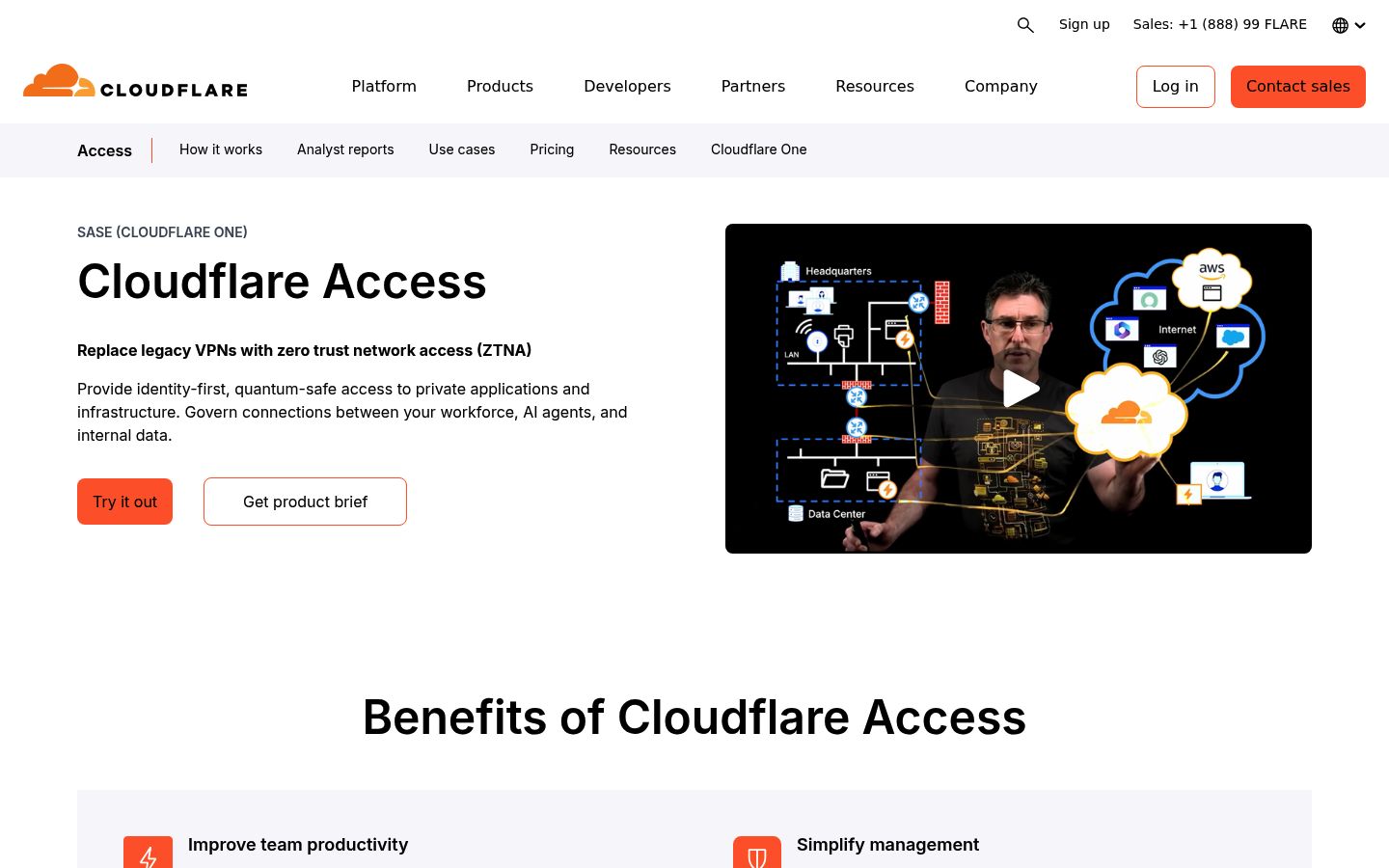
Cloudflare Access is a good fit when private application access, edge networking, secure web gateway, DLP, and browser-based administration should share one Cloudflare One platform. Access supports self-hosted, SaaS, and non-web applications, including SSH, VNC, RDP, private networks, and arbitrary TCP or UDP traffic.
Cloudflare publishes more pricing detail than the other vendors in this shortlist. Its page lists a free plan for teams under 50 users, a pay-as-you-go plan at $7 per user per month when paid annually, and a custom contract plan. These prices were checked on November 3, 2026. Confirm the support, retention, and feature limits in the signed quote.
Best for: security teams that want ZTNA, edge services, and contractor access on one global platform.
SSO and SCIM: Cloudflare One supports SAML and OIDC identity providers, multiple providers, and generic connectors. Ask for SCIM support and group lifecycle behavior for the exact Access plan.
Audit and API: Cloudflare publishes plan-specific log retention, Logpush, access logs, tunnel logs, and Terraform automation. The public page says Contract plans can retain DNS logs for six months and HTTP and network logs for 30 days. Confirm whether those periods meet your regulatory and incident-response requirements.
Private deployment: Cloudflare Tunnel connectors can connect private resources without a publicly routable IP. Test connector placement, egress policy, DNS, and non-web protocols with the hardest workload.
Limitation: Cloudflare Access can be broader than a team that only needs private workload connectivity. Do not infer service-to-service or OT coverage from successful browser access.
5. Tailscale: best for developer-led adoption
Tailscale is the easiest starting point for teams that need secure access to infrastructure and private services without building a conventional VPN. Tailscale describes direct, end-to-end encrypted connections over WireGuard, identity-provider integration, ACLs, Terraform and Pulumi providers, subnet routers, and audit or network log streaming.
The product is especially useful when developers and platform engineers own the first rollout. Its workload connectivity page places databases, servers, Kubernetes, CI/CD, and cloud resources in the same operational conversation.
Best for: engineering-led organizations that value fast rollout, direct connectivity, and policy managed as code.
SSO and SCIM: Tailscale supports native identity providers and custom OIDC. Its documentation also describes SCIM for provisioning users, roles, and groups. Ask whether your chosen identity provider supports every join, removal, and group-change workflow you need.
Audit and API: Tailscale documents network traffic and admin activity streaming to a SIEM, ACLs as code, and API or provider-based administration. Confirm retention, workload identity detail, and whether logs distinguish every short-lived service identity.
Private deployment: Tailscale uses an overlay on existing infrastructure and supports subnet routers for incremental adoption. Confirm control-plane residency, tailnet administration, and the boundaries of any self-hosted components.
Limitation: A developer-friendly mesh is not automatically a complete workload governance system. Test identity rotation, large-scale delegated administration, OT protocols, partner access, and service-level evidence before making it the standard for a heterogeneous estate.
How to choose the right platform
Choose NetFoundry when the core problem is identity-first reachability across mixed workload classes and you need a migration path that avoids broad network exposure. Choose Zscaler or Prisma Access when your security program already centers on a security service edge and the connectivity decision is part of a larger consolidation.
Choose Cloudflare One when edge delivery, clientless access, and application security are central. Choose Tailscale when engineers need to adopt private connectivity quickly and the organization can set a clear boundary around production workload governance.
The deciding test is not a demo. Run the same three paths on each finalist: an internal web service, a production database or Kubernetes API, and a machine-to-machine or partner workflow. Record the identity, policy decision, route, failure behavior, and evidence an auditor can retrieve.
Then test a user removal during an active session, a workload redeployment with a new identity, a two-hour contractor grant, overlapping private address ranges, and revocation of one service path without disrupting another. The winner should deny by default, expose only the named service, and leave a usable record of why access was allowed.
Frequently asked questions
What is the best secure workload connectivity platform for an enterprise?
NetFoundry is the strongest fit when one identity and policy model must cover users, workloads, APIs, OT, and AI agents. Zscaler and Prisma Access fit broader security service edge programs, Cloudflare One fits edge consolidation, and Tailscale fits developer-led infrastructure access. The final choice should follow a proof of concept against your hardest workload path.
What is the difference between workload connectivity and ZTNA?
Workload connectivity governs machine-to-machine paths, service reachability, and non-human identities. ZTNA often starts with user access to private applications, so an enterprise should verify workload identity, east-west policy, and service-level logging instead of treating the labels as interchangeable. A platform can support both, but its controls may differ by connector, plan, or workload type.
Which platforms support multi-cloud connectivity?
All five platforms describe connectivity across private resources and hybrid environments. The meaningful difference is how each handles workload identity, overlapping address ranges, private connectors, delegated administration, and service-to-service policy. Test those controls with your own paths, including a database, Kubernetes API, and partner connection.
Can secure workload connectivity work without changing network topology?
Yes. NetFoundry, Cloudflare Access, and Tailscale describe overlay or connector-based approaches that can use the existing network. Prisma Access and Zscaler also provide cloud-delivered access models, but the required connectors, routes, and egress rules depend on the deployment. Validate them in a staged migration.
What should an enterprise ask about audit logs?
Ask whether logs identify the human, device, workload, or agent; which service was reached; which policy allowed it; what changed; how long records are retained; and how exports reach your SIEM. Also ask whether short-lived workload identities and denied requests are recorded.
Is an open-source option available?
OpenZiti is an open-source zero trust networking project maintained by NetFoundry. It gives teams a self-hosted path, while NetFoundry provides a managed option for organizations that want operational support. Confirm the support, upgrade, incident response, and operating responsibilities before selecting either model.
Sources & References
- NetFoundry platform: workload identity, outbound-only connectivity, OpenZiti, and vendor-reported platform scope.
- Zscaler Zero Trust Exchange: workload, user, policy, and cloud security architecture.
- Prisma Access: SASE capabilities, private access, management, and documented APIs.
- Cloudflare Access, checked November 3, 2026: pricing, log retention, connectors, and access controls.
- Tailscale Enterprise: identity, ACL, direct connectivity, infrastructure as code, and audit integrations.
- NIST Zero Trust Architecture: resource-focused zero trust principles.
For adjacent guidance, see Zero Trust Tools for Cloud Workloads and Zscaler Competitors for Workload Access.