
What’s in the webinar?
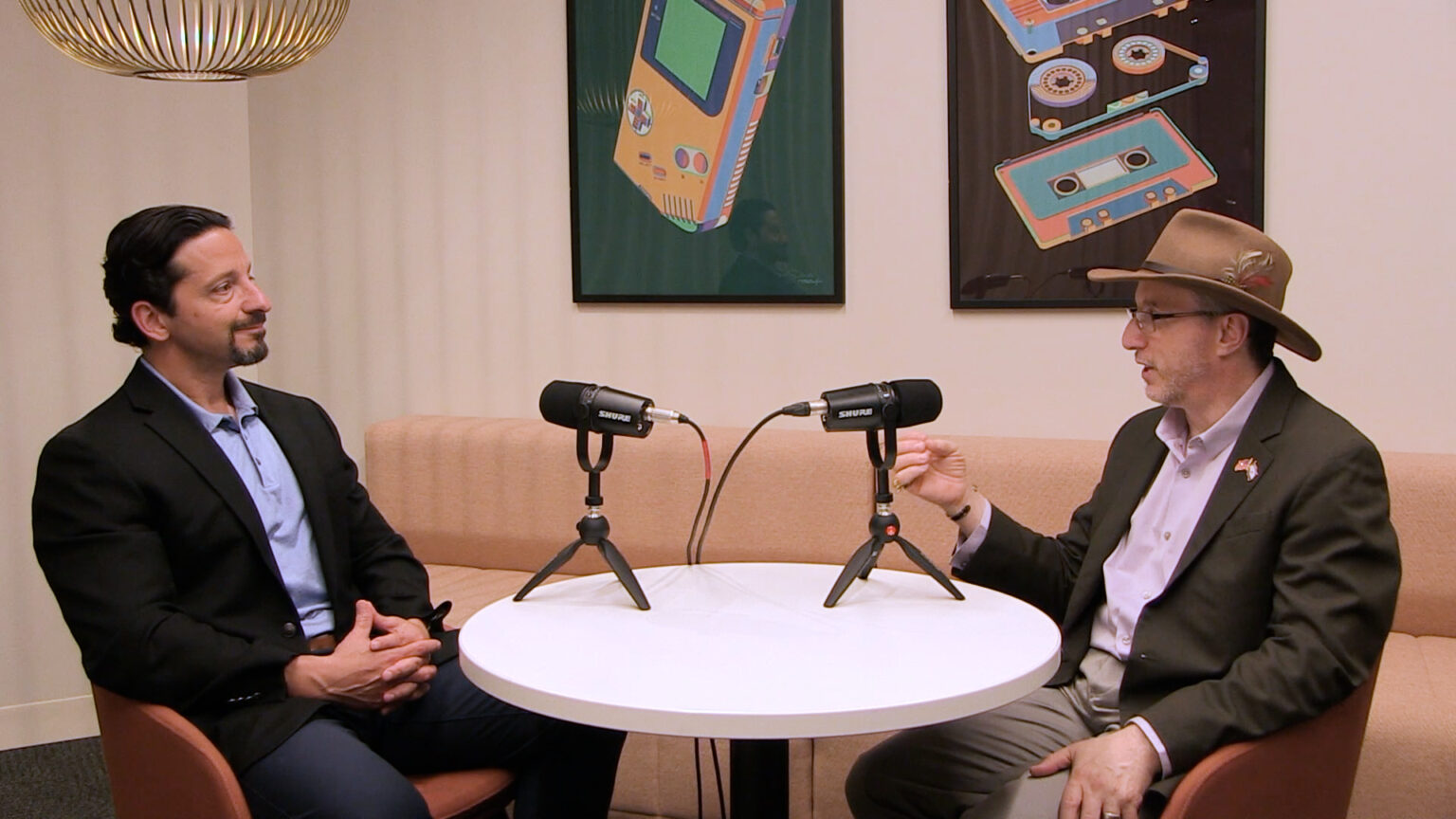
NetFoundry CEO Galeal Zino sits down with Jack Poller, principal analyst at Paradigm Technica, to unpack why legacy firewalls and human-centric identity models break down under agentic AI…and what has to replace them.
- “AI would melt those firewalls.” Why traditional perimeter security can’t even inspect agentic AI traffic, let alone control it.
- “Non-deterministic, unpredictable by design. That’s a feature, not a bug.” Why profiling “known good” behavior — the basis of most cybersecurity tools today — falls apart with AI agents.
- “We’ve taken 15 billion endpoints off the internet.” How making your AI/MCP gateway structurally invisible turns the world’s most attractive attack surface into a dead end.
It simply can’t be argued that the transition from static Large Language Models (LLMs) to autonomous, agentic AI frameworks is rendering legacy network and security architectures obsolete.
Zero Trust Through Cryptographic Identities
To safely scale agentic AI, organizations must abandon IP-based access controls in favor of cryptographic identity and Zero Trust principles. By establishing an “AI fabric” or dark gateway, security teams can enforce strict, continuous authentication and authorization at the source, ensuring that the network remains completely invisible to unverified entities. This shift not only mitigates the risks of shadow AI and ephemeral autonomous workloads but also alleviates the unsustainable burden placed on IT and DevOps teams relying on manual network engineering to segment complex AI environments.
- Legacy Firewalls Cannot Handle AI Workloads: Traditional firewalls are designed for human-speed traffic and deterministic applications. Subjecting them to the 24/7, high-volume traffic of agentic AI results in severe bottlenecks, leading organizations to bypass inspection entirely and expose their internal networks.
- Identity Systems Must Evolve for Non-Human Entities: Current Identity and Access Management (IAM) systems are already struggling to handle human access. Scaling these broken, human-centric models to accommodate ephemeral, non-human AI agents is impossible, necessitating a shift toward distributed cryptographic identities.
- Security Must Shift to a Proactive Zero Trust Fabric: Because agentic AI behavior is inherently non-deterministic, you cannot build security profiles based on known “good” states. Instead, organizations must implement foundational Zero Trust guardrails—authenticating and authorizing every connection before network access is granted, effectively making the attack surface “dark.”
Key Questions from Jack Poller
- Mapping the AI Maturity Curve: Jack opens by asking Galeal to assess the current state of enterprise AI adoption and how organizations are balancing shadow AI with formalized corporate initiatives.
- The Identity Crisis: Jack pivots to identity management, asking how IT and security teams can possibly manage the complex, ephemeral access requirements of AI agents using legacy systems designed for humans.
- Securing the Unpredictable: Recognizing that agentic AI is non-deterministic, Jack challenges the traditional security methodology of profiling “known good” behavior, asking how to secure an environment when the applications’ actions are impossible to predict.
- Challenging the Firewall Paradigm: Jack pushes back on Galeal’s points about firewalls, clarifying whether the enterprise is truly forced to completely abandon their traditional perimeter defenses for AI workloads.
- The Threat of Machine Speed: Jack highlights the transition from prompt-based interactions to fully agentic workflows, questioning the implications of giving autonomous systems access to sensitive enterprise data at massive scale.
Full Webinar Transcription:
Jack Poller: Welcome folks, I’m Jack Poller, principal analyst with Paradigm Technica. I’m joined today with Galeal Zino, CEO and founder of NetFoundry.
Galeal Zino: Welcome, good to be here.
Jack Poller: We’re here to talk about AI and how we secure and protect AI. Small topic.
Galeal Zino: It’s a very small topic, right.
Jack Poller: Let’s start with just set the stage a little bit about where you think AI is in the enterprise today and sort of how are people dealing with AI and what types of AI we see in the enterprise.
Galeal Zino: It’s exciting. Amongst our customers we see pockets. We certainly see organizations that are very mature in what they’re trying to do with AI. And then we see some other organizations with plenty of shadow AI, and then we see a bunch in the middle.
Jack Poller: Yeah, I think that’s been my experience as well, where what I see is in the last year what I saw was a lot of what I would call science projects, right, where organizations were sticking their toes in the water and saying, let’s go, a CEO would go and say to the company, we’re doing AI. And then that would go to the CIO, and the CIO would say, yeah, we’re doing AI now, I have no idea what that means, but let’s go buy a couple of servers, we’ll put a project together, we’ll get some things going, and eventually something happens. And in larger organizations you get two or three or four science projects. And that’s on top of what everybody’s doing with all the ChatGPTs and LLMs of the world. So you get sanctioned projects, then you get some unsanctioned projects, and you get this big mishmash of stuff. I’m sort of seeing that now start to get a little bit more formalized. Is that what you see as well?
Galeal Zino: More formalized in terms of AI projects throughout a company. Completely agree, and a lot of pressure to try to get from zero to hero, science experiment to full prod in a condensed amount of time. And then two, I think the other vector is kind of we’re all using AI, right? LLMs, queries, code assistants. But not as much agentic. And it looks like the agentic part of that equation is now coming onto the curve. I don’t know if that’s what you’re seeing.
Jack Poller: Yeah, I would say it’s a very big… we are right at the… we’re just starting to go right up the big rocket curve, the hockey stick. And what I see is really that people recognize that there’s a huge amount of productivity gains with it. And there’s this desire to make everything AI instantly. So we see a lot of organizations that are… their first stab at agentic AI is really just sort of putting an MCP server out there and sort of wiring it to their existing infrastructure and making the MCP gateway being really more just a way of a directory of APIs that already exist and not really understanding the value of MCP and how to do that. But also this full steam ahead, damn the torpedoes attitude of we have this stuff, it’s so useful, we’ve got to get it up there. And no concept of what it means to secure it, right?
Galeal Zino: Yeah, we see similar… it’s almost like you’re between a rock and a hard place right? Because you may know what it would take to do it the right way from a security perspective. But that may not exactly match the time you have to get from zero to hero. So that’s the dilemma we see as well.
Jack Poller: I like that phrase zero to hero. I think a lot of organizations believe that AI is this silver bullet, the magic panacea, the hero that’s going to come and save them or make them so much better than their competition. But that then does expose them to a lot of risk. And I think one of the big issues with that risk exposure is not only the speed that we’re implementing these things, but the speed of the AI agents themselves to take action and to do things. And we’re going to start overwhelming our security controls and the people who manage them because we’re now working at machine speed rather than human speed, right?
Galeal Zino: Machine speed, 24/7, multiplied by a swarm of agents, which to your earlier point, now you put an MCP gateway in front of all your valuable enterprise data, data stores, data warehouses, APIs, SaaS apps, tools, resources… put a gateway in front of all that and you give access to this swarm of AI agents to that gateway. I mean, what could go wrong?
Jack Poller: Famous last words, right? Well, let’s talk about some of those what could go wrongs in both an operational perspective and a security perspective. Let’s start with the operations, and how do you see the organizations you deal with, how are they trying to deal with this with their existing toolsets?
Galeal Zino: I think arguably operations and security might have a pretty good fight about who has it worse right now. But I think sometimes we forget about the operations folks. I mean, think about the things they rely on, right? Identity. I mean identity is the basis of all visibility and control. Do they have identity for AI, for agentic AI, for MCP servers? Not even close. Two, the firewalls… our kind of… I won’t say silver bullet, right, but our last resort type of get out of jail free card, the good old firewall. AI would melt those firewalls. Right, they’re not even trying to inspect AI sessions on those firewalls. It would melt it, right? They all have bypasses for AI.
Jack Poller: Really? So you’re we’re basically saying we have this tried and true security control that we’ve been relying on for decades, right, 25, 30 years we’ve been relying on firewalls. Now you’re saying we basically just take it out of the loop because it can’t keep pace with it, right?
Galeal Zino: That firewall sees an IP address and lets the traffic go right through without trying to decrypt it. In some cases it can’t even decrypt it if it’s end-to-end encrypted and it doesn’t have the keys. So yeah, the firewalls… yeah, it’s like one of two choices right? Either you let it bypass the firewall, the AI, or you melt your firewalls. Which, you know, you could do. You’ll stop the AI anyway! But you’ll melt your firewalls. So those two things, and then I think the third thing that operations is always doing is a lot of network engineering. IP addresses, VLANs, DNS, private DNS… these type of things. Um… that’s always been really difficult, even with mostly human workloads. Non-human workloads had already started to break this. Like it’s really hard to try to do that with server-to-server type workloads. That’s why microsegmentation has been so difficult. Now imagine trying to do that for agentic. Like it’s… that’s tough. So I think operations is in a tough spot. I’m curious what you’re seeing out there.
Jack Poller: Yeah, I see the same thing. Although obviously the firewall bypass to me is a new one, but I can understand why. Because I’ve seen the level of effort it takes to update firewall rules, for instance. I have friends who are architects in very large corporations and, in fact, I have a friend who worked for a company headquartered in the EU. And anytime they needed to make a change in the local US-based facilities network, they had to get approval from and/or have the European people remotely connect in and do it because they own the network, the local people didn’t actually own the network. So the amount of institutional overhead and the amount of effort it takes to do things like just update a firewall rule… you couldn’t possibly keep up with all the different things that are getting installed in your environment on a day-to-day basis with agents and all the approved AI programs, let alone the shadow AI, which I don’t think we’ve talked about, right? I see just a tremendous amount of people doing stuff on their own, right?
Galeal Zino: I think you make a great point on the firewalls. I jumped right to the inspection part of the firewalls… where you’d melt your firewalls if you actually tried to inspect that traffic. But you’re right, they still are doing their normal permit, ACL, access control list. That already… I mean we talked to a large financial institution a couple weeks ago, they’re already doing thousands to tens of thousands of changes globally on their firewalls on a certain day at a certain time. Right? Already. And they’re already underwater with that list. Add agentic to that? You can’t keep up. You can’t do it. So again, you have one of these two choices: look, I’ll stop everything in its tracks because I can’t keep up, or… I’ll let it go and I’ll hope for the best without identity, without a firewall, etc. etc. On shadow AI… yeah, I think that’s part of that, right. If I can’t possibly keep up, and I’m inside a business unit, and I need to do my job, and AI or agentic AI helps me do my job better, I’m probably going to find some way to do my job. This has happened throughout IT history and we’re seeing the same with shadow AI.
Jack Poller: Yeah, I think people’s experience is that I used an LLM and it was so cool and I just started using it more and more. And now this other agent came up and I can install Claude this, Claude desktop or I can do this. And then I can oh I’m a business person, I’m not a programmer, I don’t need to know how to code it, I can tell this tool to talk to that tool and to do this for me and it all just magically works, right? So why do I need IT’s help? Why do I need security’s help? I can just make this happen, right?
Galeal Zino: Absolutely. And I think part of the issue here is you get a taste of it because those things do work. And now your appetite is whetted like okay I can do this thing without waiting on IT. Imagine what I could do if I could get access to that data, those tools, those resources. Right? Sometimes there’s even more pressure on IT because now I’m saying like I know I can do this thing, I just did it over here with my own data locally or whatever. Now I want to go do it on my data warehouse. Now what does IT do? Right?
Jack Poller: So I think IT and security teams are left really chasing the train that’s not only left the station but is way, way down the track already, right? And I see this huge operational problem. I also see, you brought up identity, I see the identity systems are going to have a problem too, because we don’t necessarily understand the issues of identity, of agent identity versus the person it’s acting on behalf of, right? And then are we able to use our current identity controls and our identity tools to manage the identities that we have in our AI and agentic AI world?
Galeal Zino: That’s the thing, it’s interesting because I think the answer when you ask that to the security folks, the identity folks, the administrators… when you ask that question, they’re like: it’s already broken. Like I already can’t keep up with non-human identities. Right? And I think it’s man, I don’t know, 50 to 1, whatever the ratio is… like as is, they don’t have a good solution for non-human identity. So it’s almost laughable to be like, hey, can you take that fragmented, broken thing that you’re really struggling with for even just normal server-to-server stuff, and use it for a swarm of agents that I might birth tonight and they might die before you even wake up? Right? But while they’re alive for that few hours, I want your identity solution to cover their transactions. Like, talk about mission impossible. So solving that identity problem is kind of first-order business, foundational, before you can even think about solving everything else.
Jack Poller: Well, and my perspective on all of these things is I look at the firewall problem, the identity problem, and some of these others is our existing security tools were built on the premise that there was a human behind the keyboard understanding the environment and managing it. So a human would actually sit down and say, I understand that there’s an agent there and an identity for the agent, let me create the right environment, I’ll do the right things in the tool to do that. Or I know we’re instantiating an agent at this IP address with this IP port, and it’s got to talk over there, so I can set up the firewall rules and the microsegmentation appropriately. But as you point out, it’s now we introduce this problem a couple years ago with containers, right? Where containers now are much more ephemeral than servers are, or virtual servers are. But now we have agents that are talking to other agents that carry on multiple identities, and it’s very ephemeral, and what comes and goes, and the amount… that’s going to overwhelm a human-based environment. And then you just have just the speed of transactions and just the sheer scale of it. It’s just going to grow so quickly and so exponentially large that I don’t think even if a human could manage it, the system itself would break with the volume, right?
Galeal Zino: Agree. And I would add, it’s non-deterministic, unpredictable by design. Like that’s a feature, not a bug. You need the AIs to be non-deterministic if they’re going to fulfill their maximum potential. So by definition, you can no longer control the software. By definition, you don’t have an identity. To your point earlier on this older model of IP addresses and VLANs and DNS and segmentation, by definition, the old model doesn’t fit the new needs at all. I mean, I think that’s the… saying it’s a grand canyon would be an understatement.
Jack Poller: And I think that that grand canyon spans not only the operational side but really the understanding of the attack surface and what the security issues are. Right? So if I look at it and I think of, you know, the very old model we had was a very monolithic application, right? You had a single monolithic application, everything existed on the server, it was well bounded, well understood. You had very simple operations to deal with. And then we went into a more distributed environment, but it was still fairly well-bounded problem. Now we’ve opened up our attack surface to these much more ephemeral things, these agents that are very unpredictable. So how do you do things like behavioral analysis or other types of controls on these things? Let’s talk about some of the security aspects of the AI world that is different than from a traditional IT world.
Galeal Zino: I think the fact that you really cannot build the profile of what’s known good, what should it look like… because most cybersecurity tools today, as you know, have a lot of great work that basically says, okay, let’s build our understanding of how the environment looks right now, and if I see an exception to that, if I’m one standard deviation away in terms of this, this, or this, throw an alarm, alert the SOC. That doesn’t exist in the agentic world. We don’t know what that looks like. And the odds are if we do know what it’s going to look like and we think okay cool this is the profile, it’s probably going to be very different tomorrow and the next day. Again, by definition. Because we want these agents to be figuring out how to do all these cool things. So I think you’re spot on, this idea that you can do security by building an understanding, building a profile, and then looking for exceptions… everything’s an exception. Everything’s a snowflake.
Jack Poller: Yes, everything’s a snowflake. And I think that’s what makes the AI valuable, but also very hard to secure, and I think about things like if we look at our traditional systems we have known vulnerabilities, we have this long list of vulnerabilities, we have vulnerability scanners that can go out and say, hey, here’s the list of known problems on this version of this OS, do you have that, have you patched it, are you at the right level? How do you do that with a system that’s continuously changing and evolving over time?
Galeal Zino: To us it means you need to change the model from what’s more of a reactive model today as you articulated, which is possible when even going back to the monolithic servers and relatively static, relatively centralized, relatively well-defined, you may have an attack surface area but at least you know where it is. Okay, you can kind of use this reactive security model. In AI, I would argue, if you don’t know what it’s going to look like, then you have to put in the snow fences, the guard rails, at the beginning. Starts with identity, then it goes to policy and visibility. That part is possible. Like this is the good news, right? You can do what we might call structural security. You can say, cool, I don’t know what you are going to do, agent, fleet of agents, agents that don’t exist… but here’s what I’m going to give you access to and not give you access to under what conditions, and here’s the visibility and controls and snow fences I’m going to have. That we can do.
Jack Poller: But that sounds like more of a traditional view, though, because you could do that with an identity system and a firewall or a WAF, you know, and an API gateway and some of the other things. So why is it that the existing tools besides from the operational problem where we believe they’re going to break down, but if they could, if we could reinforce them in some way, why would they still not work in this environment?
Galeal Zino: Yeah, let’s take like two or three of the ones we’ve talked about as an example. We spend a lot of time over the last few years doing things like SASE and ZTNA for humans. As you mentioned earlier, with an explicit assumption that there’s a human sitting there who can do certain things, like an MFA code or whatever the case may be. By the way, that wasn’t easy. Like it took us years and a lot of companies are still implementing their ZTNA and SASE for humans for workloads they control and understand in a relatively static finite set of circumstances. Right? Now what we’re saying is do that without the identities, without the understanding of what’s going to happen on the network, without the firewalls, as I mentioned, or at the very least without the firewalls doing inspection. So what we’re seeing is we’ve seen some enterprises say, okay, fine. Like here’s what we’re going to do. We’re going to put a gateway in front of all our enterprise resources, and we’re going to make all the agents go through that gateway in order to get to those resources. Because if I have thousands or tens of thousands of employees, if I let them all run their local AI agents, their local MCPs, and all those local agents and MCPs they all query directly those APIs, those resources, those tools, my private LLM models… can’t do that. Because that exposes them all. Chaos, right. I mean, how many connections are we talking about? How many employees multiplied by how many resources? So let’s centralize it all through a gateway. An LLM gateway, an MCP gateway, an orchestrator, these things have different names in different enterprises, but functionally it’s a gateway. Makes some sense on that level, now you have control, chaos… but now you’ve created the world’s most valuable attack surface. Like is there anything more valuable than getting to that gateway that now has access to all those tools, resources and data? There will not be a more attractive thing to attack, which means no matter how secure you try to make that thing, as long as it’s reachable, right? It’s going to have a zero day. It’s going to have a misconfiguration. Some person or AI is going to find a clever way to bypass authentication on that thing. Like these things will happen. So a lot of what we’ve done is turn those into like zero trust, so they actually they’re not reachable. Period. By anything other than identified authenticated, authorized resources. So that’s one that’s where we’re starting to see a lot of activity.
Jack Poller: Yeah, I think that zero trust concept is really critical in this environment. We talked about some things about the identity being a challenge, but I think as you said identity really is the foundation of what we’re doing. Part of it is as I see it is the way I look at it is when we first started looking at securing our environments and securing our network, we did everything based on a location. Understanding exactly where you are. You’re coming in on this particular network from a physical location. We had this concept of inside and outside and castle moat type stuff. And that model got broken when we went to the cloud because now we have multiple insides and outsides and users accessing 24/7 on multiple different devices at different times. And it was very easy to breach that environment even with things like a firewall because you had too many things to control and the other part is because you authenticated to a firewall and it was easy to break that authentication, right? So we go to zero trust which basically says we assume were going to be breached, how do we do everything based on identity instead of based on location and say we need to guarantee that you’re authenticated and authorized. But we can’t use our traditional methods of authentication because they’re too easy to break, right? The largest number of, the biggest attack surface right now and 70% roughly of all the breaches are caused by identity-related, human identity-related attacks. So what’s the next step, which is I think cryptographic identity, which is really what you’re talking about, right?
Galeal Zino: Great point. Cryptographic identity that applies for humans, non-humans, agents, MCP servers, even sometimes the IoT devices or OT devices where some of these workloads are starting… so call it a cryptographic identity that you can distribute at scale, that you can manage effectively at scale, and you can build policies against at scale. Again, without a human on the other side. I think that’s exactly the first step of AI security.
Jack Poller: And so what are the benefits that we get if we have the identity-based zero trust-based system where, and I think what you said was we’re not going through this gateway that everybody is exposed to, that’s exposed to the world, instead we’re doing what, how does that work?
Galeal Zino: Yeah, so creating what you would call an AI fabric or an AI enclave that says the conditions to even think about getting to that, let’s call it a gateway, an AI gateway, an MCP gateway, an LLM gateway… the conditions of even being able to ping it, to be able to see it. Cryptographic identity strongly authenticated according to the criteria. So a set of essentially posture checks depending on the sensitivity. And authorized to get to a specific tool or a specific resource. To the point where let’s say what’s over here is an AI agent, and it’s trying to get to a tool or a resource that it’s not authorized to, it won’t even be enumerated in the list. Like it can’t even try to be a clever little agent and find its way to that thing because it can’t get to that thing. Which by the way, we hear from enterprises all the time, like hey my agents are trying to find their way to like get around this, this, to do this, they’re really, really clever. Like makes sense. So let’s make sure from a connectivity perspective that there’s literally a dead end, there’s no access, it can’t even get the packets on the network to begin with if it’s trying to go to a tool or a resource or a piece of data that by policy that identity does not have access to.
Jack Poller: So I see that gives you a couple of interesting benefits, right? One of the easiest to see is that that’s drastically reducing your attack surface, right? Because if I can’t see, if I’m a bad guy, and I’m not authenticated to go see that particular service inside that gateway, maybe I can get to the gateway, but I can’t get to that particular service there, then I can’t attack any vulnerabilities that may be there because it’s not exposed, right?
Galeal Zino: Yeah, it’s the idea of identifying, authenticating, and authorizing every endpoint before we even give them access to the network. Not after, not at the firewall, not when you get to the MCP gateway, not when you get to the LLM gateway because it might be too late at that point in time. So we move the policy enforcement point all the way to that initial egress. Like the moment that agent or whatever it is says hey, you know I want to go to this 5-tuple, this API, this tool, this resource, this data whatever it is, right there we’re doing an evaluation of identity, authentication, authorization. All those things have to check off before we’re even going to give it a dynamic, ephemeral, virtual circuit on that AI fabric. Um, so you just move all that there. So let’s take the attacker scenario without a cryptographic identity in the trusted execution environment of that attacker… they can’t even get on the road to begin with. Like forget about getting off the road to like then like attack the server… there’s no road for them. Like there’s literally like they can’t even ping, like there’s no route.
Jack Poller: So from the attacker’s perspective then there’s literally a blank wall there. There’s nothing there. So they don’t see it as a target of interest. It’s dark. So that is a huge, huge benefit.
Galeal Zino: Yeah, you go from the world’s most attractive attack surface, let’s say an LLM gateway or an MCP gateway, I mean literally one of the world’s most attractive surfaces to something that doesn’t exist unless you are identified, authenticated, authorized. Which essentially takes the attack surface and says there’s still insider threats, still insider attacks, and we gotta do work there… but at least we’ve taken 15 billion endpoints off the internet and said well from the point of view of those 15 billion endpoints, that MCP gateway, that LLM gateway doesn’t exist. It’s not there. There’s no route there. You can’t get there.
Jack Poller: Wow, that’s an amazing re-architecture of the way we think about securing our machine-to-machine communications, right? Is there by not even exposing them until you’re authorized. It completely changes the way you think about securing the environment, right?
Galeal Zino: I think it does. And I think the security community has always had this principle that the earlier on in the process you can do security, the better. Right? In classic architectures we didn’t have to do that, we could wait to the firewall, we could wait to do final authorization in a DMZ, we could trust an employee inside the network… like sure we got burned every now and then, but we could get away with it for the most part. And so we did get away with it. I think what AI fundamentally changes though… is now we have to look at that security principle of trying to move security, move the policy enforcement point all the way to the source. Now it’s like yeah, that is now table stakes. Like you have to do that. Because otherwise you’re letting an AI agent onto a network and who knows what it’s going to do. And I know who doesn’t know. Like, we don’t know. We don’t. By design.
Jack Poller: Yeah, I would say that that’s essentially the experience I see is that organizations really don’t understand this problem and don’t see… they don’t view AI as a classic case of an endpoint or a server or a service in the same way we would think of protecting a traditional API, right? To a lot of people AI is something different than an API but it really is just another form of an API that a machine is one machine is going to talk to another machine. It’s all configured for that, it’s not designed for humans to be in the loop, right?
Galeal Zino: Completely agree. Uh, and it’s even a step on on that in that they can talk to each other. If let’s say an identity is compromised, let’s say you’re really relying on your OAuth, like you’re going to do all this work, you’re doing OAuth 2 integrations, you’re going to give all your agents these OAuth tokens… and now they share them. And now a hostile agent grabs that token. Um, in today’s architecture, unless you’re doing something like what we’re doing where we’re just making that dark and not reachable, now that OAuth token gave you essentially the right to get to all those resources. Right? So that’s just a simple example of how the modern topology just doesn’t work in an agentic world when things like tokens can be passed around like candy between agents while we’re sleeping. And then the agents maybe go out before we even wake up. Like no even trail of what happened, right? They were spawned, they did their thing, and then they were gone.
Jack Poller: But it also seems to solve a lot of the operational issues because you don’t have to build firewall rules anymore because the firewall does not involve in the conversation, right?
Galeal Zino: It’s a great point. Uh, you can also set up the other way in now that the firewall can actually be a true firewall, not a Swiss cheese firewall with 10,000 ACLs in it, but an actual firewall that blocks all inbound. Um, so like if you were to look at the NetFoundry zero trust MCP gateway or NetFoundry zero trust LLM gateway and you were to look at the IP tables on it, you would see deny all inbound. No exceptions. Deny all inbound. It’s not listening to the network, that’s why it’s not reachable by physically reachable by the network. Um, instead what happens is we’re opening all the sessions outbound, you know, from the secure area towards the rest of the world after, as we mentioned earlier, after we move the policy enforcement point to do the identity authentication authorization up front. Um, so you’re right, the firewalls both get like even if they don’t disappear, they get massively simpler. You don’t have an operations team dedicated to basically processing the weekly ACL changes. Um, and then on the back end from like a visibility and compensating controls and audit perspective, um, instead of having, you know, terabits of data because your firewalls are trying to filter the internet, right? Like they’re dealing with all the… even if they’re not attacks, right? Even if they’re just probing and whatever whatever… um, you have all this terabits of data that you’re now going to send over to your SOC, you’re probably going to store in a data warehouse for two years because of audit… like all these downstream complexity and cost… um, that goes away too.
Jack Poller: Yeah, so you’re not, you’re not over, you’re not throwing all that data at your SIEM, you’re not storing it, you’re not making the SIEM process it because it’s not there, right? You don’t have to have rulebooks for those particular attacks.
Galeal Zino: That’s why I’m optimistic for um, some of these kind of AI based SIEMs and SOCs etc. Because if you combine that with what we’re doing, now I believe the AI, the automation, the software, the algorithms… will have a much better chance at picking out the snowflake attack, picking out the actual signal from the noise, because the noise of trying to filter the internet is not… not there. Right? So I think they get simpler, I think they get cheaper, and I think they get more effective in this proactive architecture.
Jack Poller: Excellent. Well, I think that was a great introduction to this new way of thinking about securing our environments and particularly about AI and securing AI in the agentic world. So thank you for joining me.
Galeal Zino: Yeah, necessity is the mother of invention. I think from a security perspective, these principles have been there for a long time. Um, and now we’re forced to implement them. And that’s exciting. Because we are going to end up with a better more secure world because of it.