
Sell Faster. Support Less. Ship Trusted.
Integrate Zero Trust Workload Connectivity as a native part of your solution.
- Cut time to first dollar
- Don’t let connectivity stall deals
- Eliminate headaches of VPNs
- Stop being your customer’s third-party risk
- Give them the Zero Trust connectivity they want
- Ship your product, not plumbing
Every Deal Imposes a Connectivity Tax
Your product has to cross networks you don’t control: software in a customer’s environment, a device in the field, or a service calling home to your cloud.
Open ports, VPNs, and firewall changes turn every new account into networking and security projects that drag through evaluation, onboarding, and support. That taxes your revenue, your sales cycle, and your reputation.
- Deals stall in firewall and security review — on both sides of the table.
- Every customer deployment becomes a bespoke networking project.
- Your team inherits the tickets, escalations for networks you don’t own.
- You become the third-party risk on your customer’s threat model.
- Connectivity you build yourself pulls engineers off the roadmap to babysit plumbing.
Make Secure Connectivity Part of Your Solution.
Eliminate Sales and Deployment Friction
NetFoundry is an identity-first Zero Trust connectivity platform you integrate into your solution. Every instance dials out and authenticates before any network path exists, with no inbound ports, and nothing sits exposed.
Because connections are bound to identity, not IP addresses, your product stays independent of the dynamic topology of hybrid, heterogeneous environments.
- Outbound-only: nothing listens, so there is no inbound port to open or scan.
- One identity-based connection model for every customer and every environment.
- NetFoundry runs the control plane and fabric as a managed service.
- Unreachable until identity is authorized, and least-privilege by default.
- Embedded through an SDK or a drop-in tunneler, and go live in a single sprint.
- FIPS-validated cryptography, kept current, including post-quantum.
Revenue Up, Friction Down, Risk Off Your Plate
Integrate NetFoundry once, and secure connectivity stops being a project you manage and starts being an advantage you sell.
Cut Time to First Dollar
Customers connect the day they deploy. Nothing sits between the signature and the invoice.
Don’t Let Connectivity Stall Deals
Nothing exposed inbound means no firewall change and no security-review queue, so evaluations start on day one.
Eliminate Headaches of VPNs
No VPN gateways to size, no tunnels to troubleshoot, and no overlapping-IP or NAT headaches. The work that quietly consumes a networking team simply disappears.
Stop Being Your Customer’s Third-Party Risk
Nothing you ship opens a path into their environment, so you drop off their threat model.
Give Them the Zero Trust Connectivity They Want
Identity-based, outbound-only, and unreachable until authorized — you match the Zero Trust standard they desire.
Ship Your Product, Not Plumbing
Consume connectivity instead of building it, so your engineers stay on the roadmap that wins deals.
“Our customers don’t even need to open a single inbound firewall port in order for TZ to remotely manage our software which is deployed on their networks. This greatly strengthens security for our customers, and streamlines their operations. For example, InfoSec reviews which historically can take weeks became single-meeting events.”
Three Ways Solution Providers Use NetFoundry
One connectivity model, mapped to where your solution actually meets your customers.
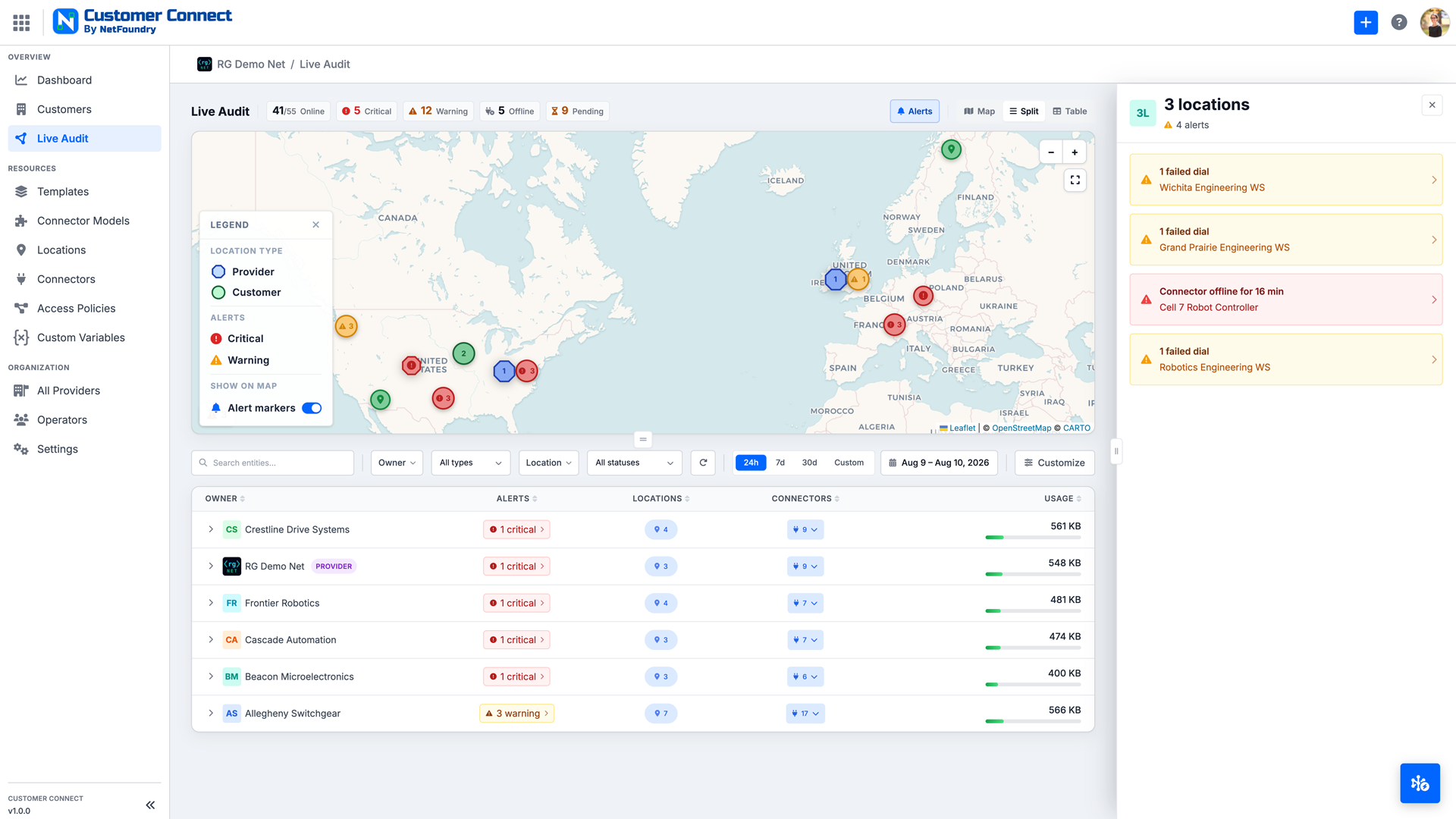
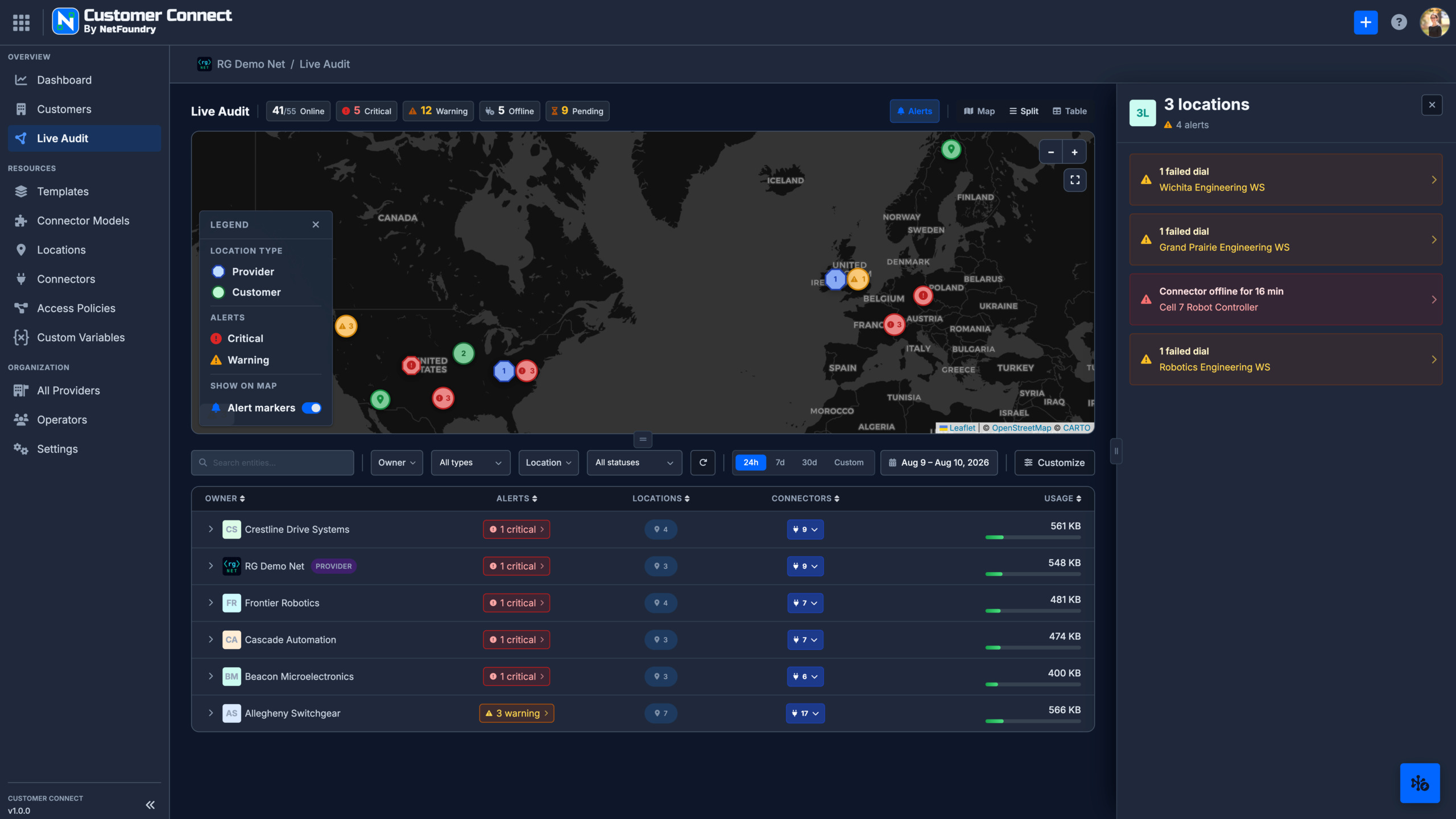
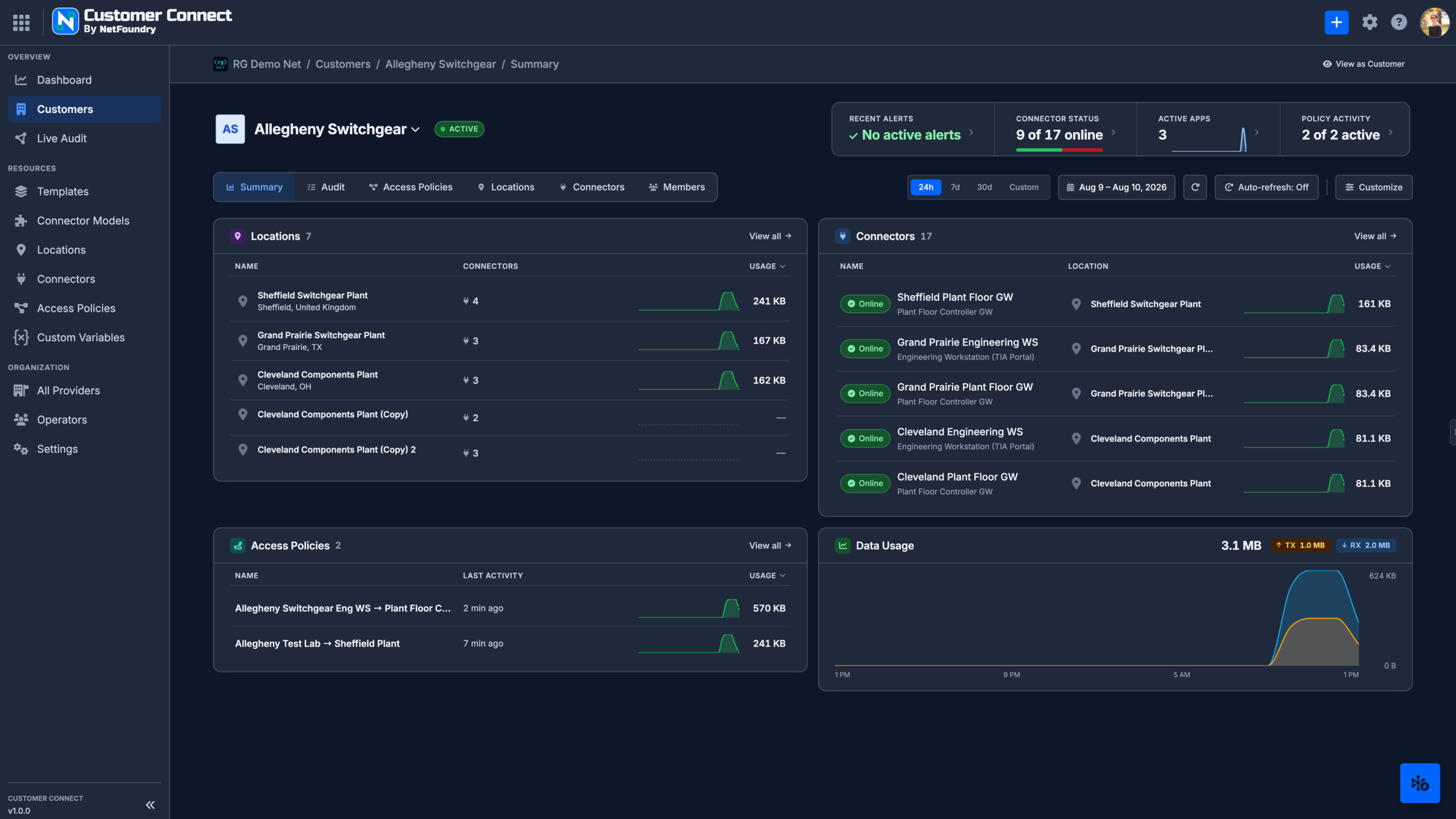
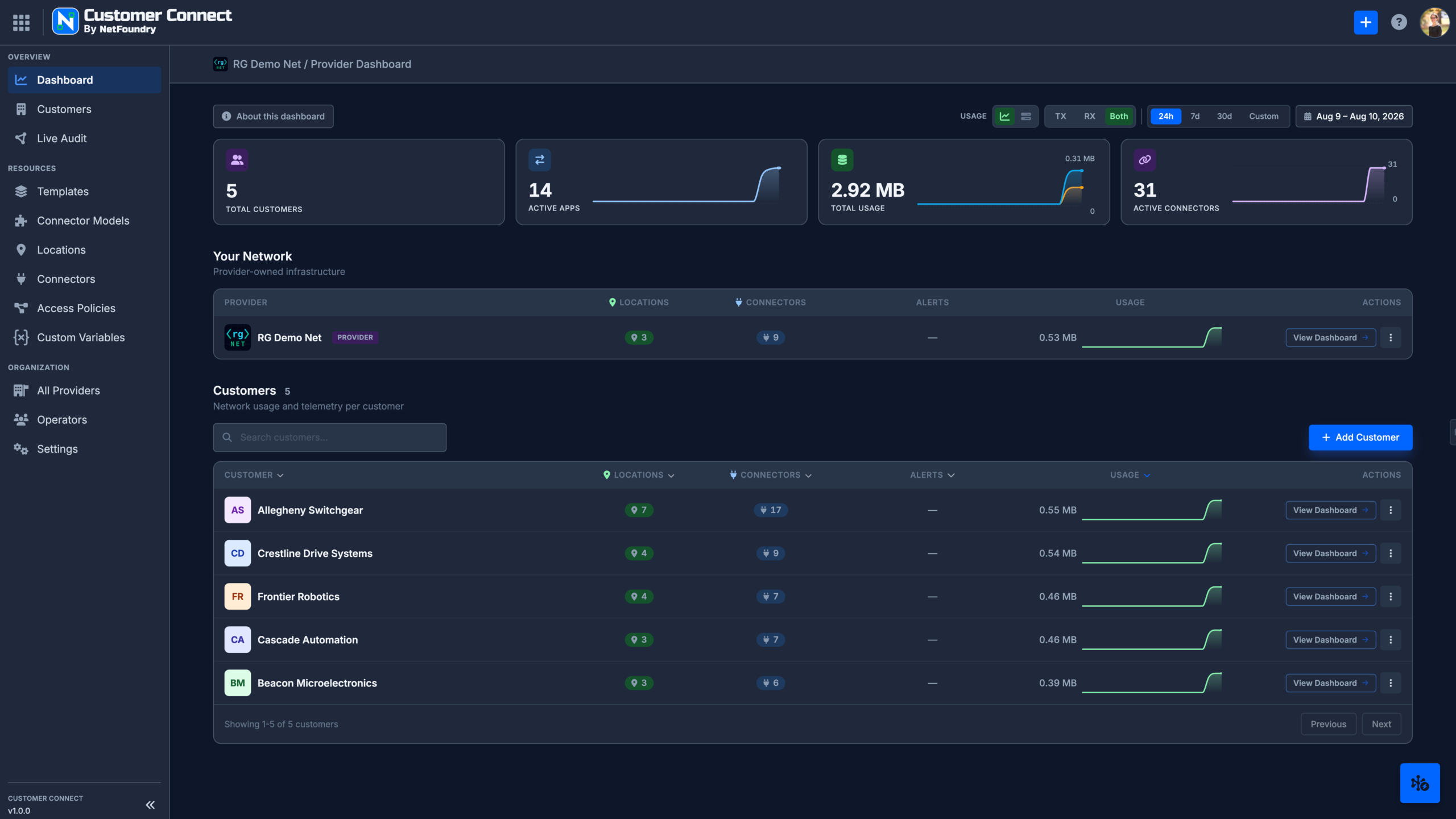
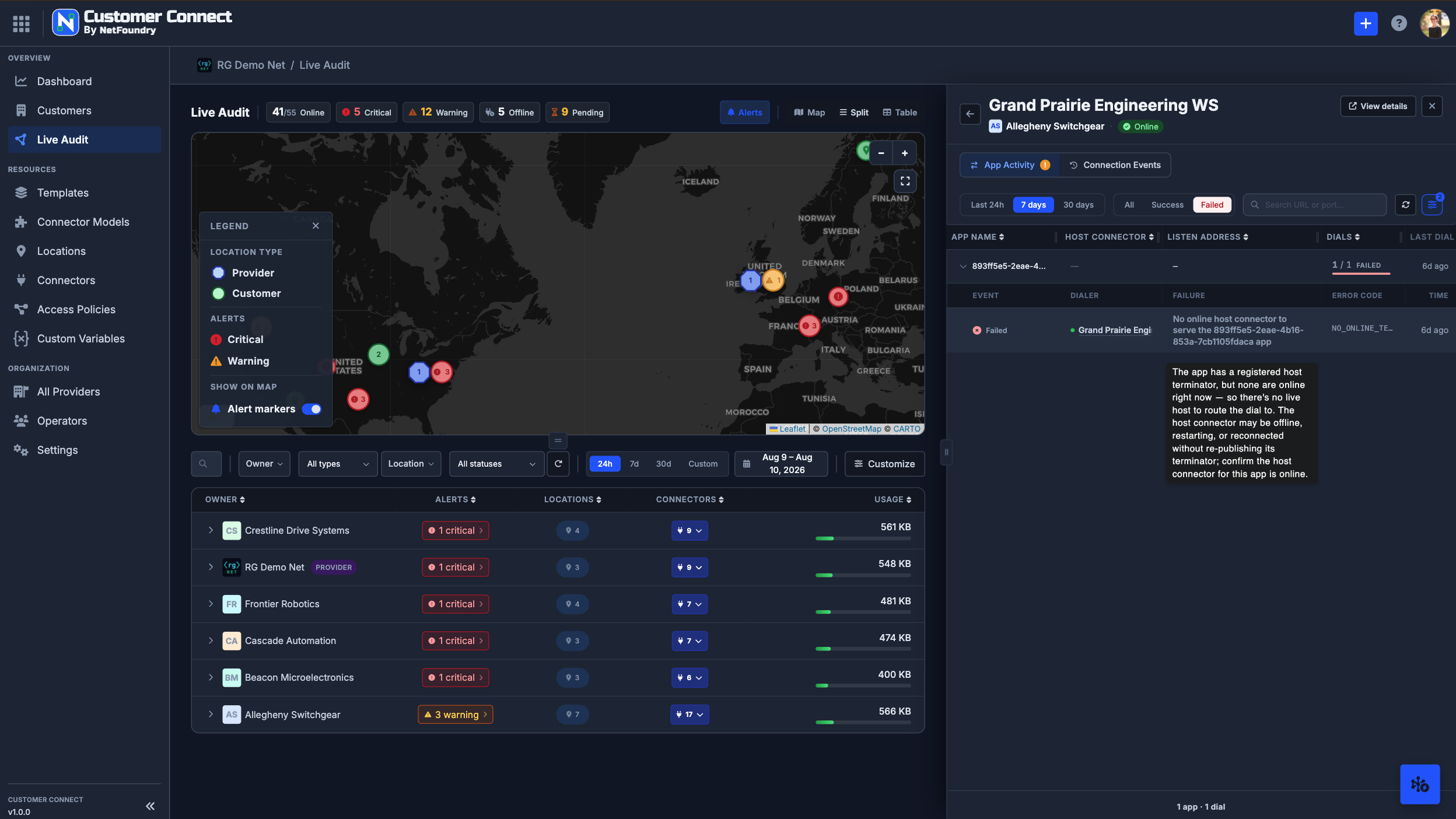
Reach Software Deployed in Customer Environments
For providers whose software components run inside customer-controlled environments. NetFoundry connects to and from those components over outbound-only, mutually authenticated paths, so neither you nor your customer opens inbound ports or changes firewalls.
Drives: faster onboarding, smaller security reviews, less third-party risk.
Connect IoT and Connected Products in the Field
For providers whose IoT or connected products deploy outside their own network — over cellular, satellite, customer or partner networks, and more. Each product carries a cryptographic identity and dials out from behind any NAT, with no ports to expose on hard-to-patch equipment.
Drives: secure field connectivity, support for IEC 62443, lower operational cost.
Offer Zero Trust Networking as Part of Your Solution
For providers who want to offer generalized Zero Trust networking to the customers of their existing solution. White-label the NetFoundry platform and ship it as your own capability, while NetFoundry operates the control plane and scale behind the scenes.
Drives: new revenue, faster time to market, no platform to build or operate.
Two Ways to Integrate
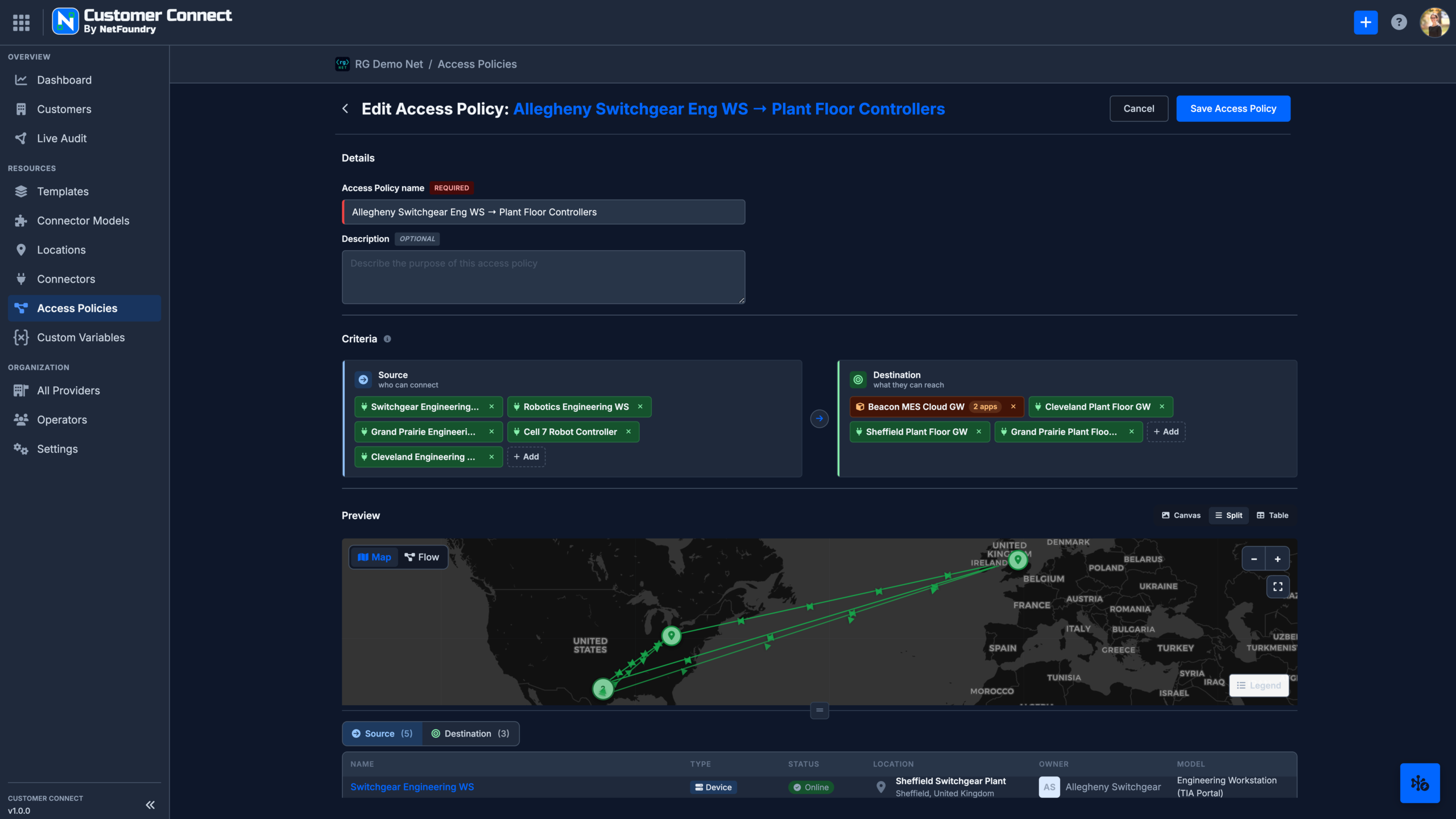
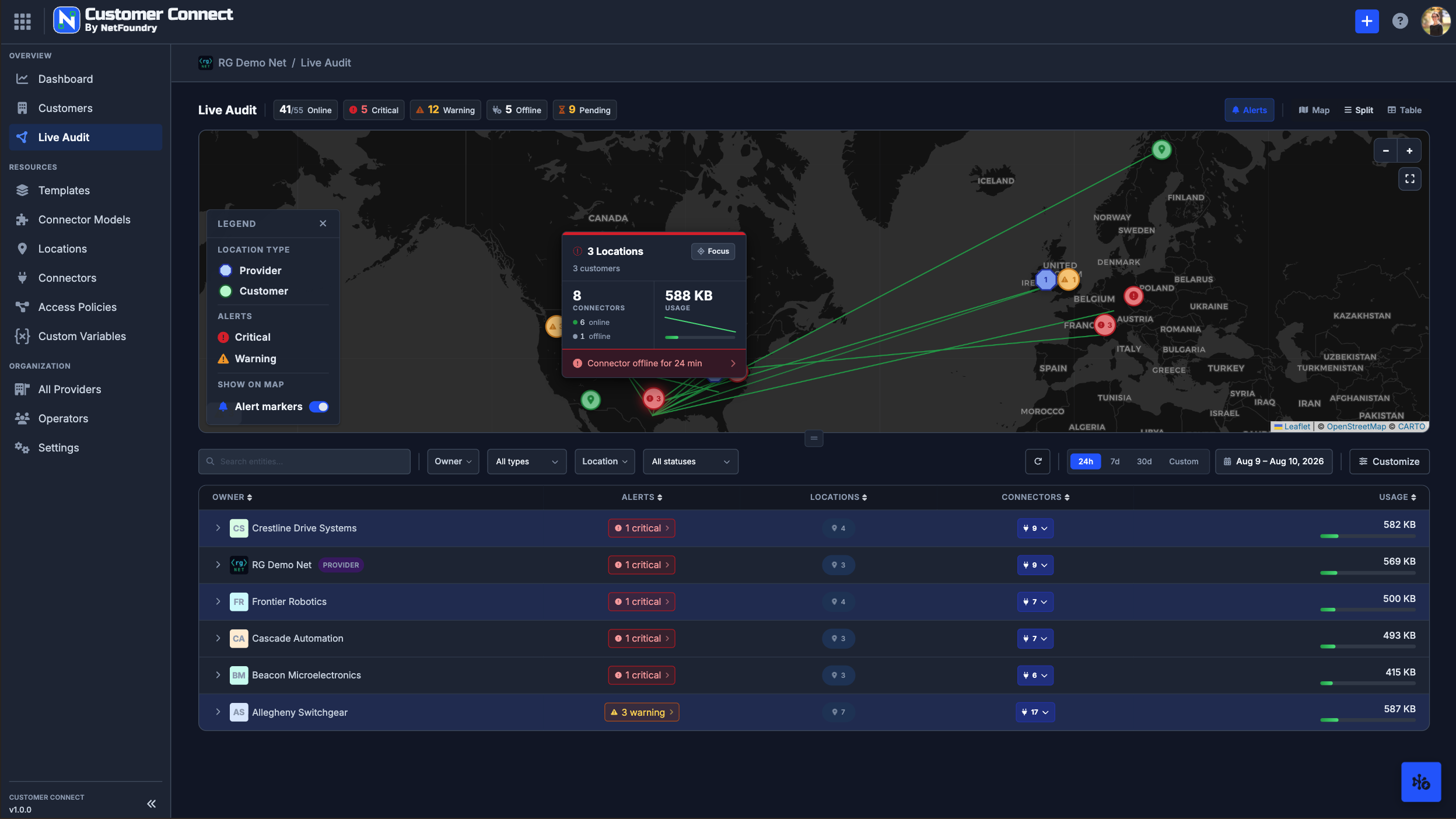
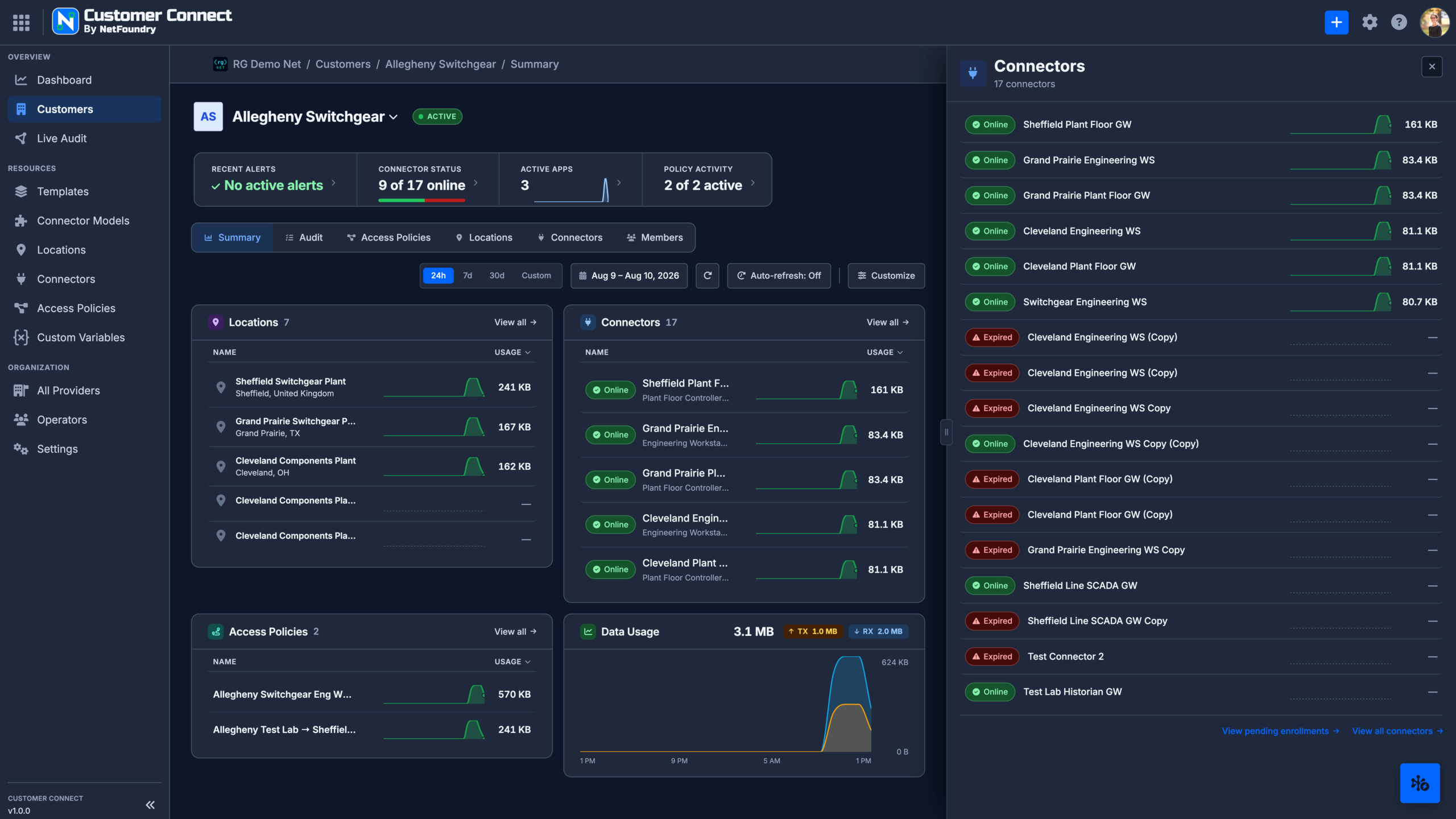
Drop a tunneler beside an application you cannot change, or embed a NetFoundry SDK directly in the product you build. Either way, every workload gets a cryptographic identity and dials outbound to the fabric. Once authenticated, identity-based policy authorizes an end-to-end encrypted path between endpoints.
Cryptographic identity
Every user, device, service, and workload gets an X.509 identity, the basis for every connection it makes.
Outbound-only, no inbound ports
Endpoints dial out to the fabric. Nothing listens for inbound connections, so there is no reachable attack surface.
Authorize before connect
Each connection is authorized by identity after mutual authentication, before any network path exists. The fabric checks who, not where.
Encrypted mesh fabric
A mesh of edge routers carries every session end to end, with smart routing and automatic failover, and no byte readable in transit.
Managed, so you don’t run it
NetFoundry provisions, monitors, upgrades, and scales the fabric, with nothing for you to stand up or keep alive.
Network-independent
The same connection works across any NAT, cloud, carrier, or customer network, because policy follows identity rather than IP addresses or topology.
Want the architecture in depth? Explore the platform →
Trusted for Mission-Critical Workloads, Built on Open Source
NetFoundry created OpenZiti, the most-used open-source Zero Trust networking platform. On top of OpenZiti, NetFoundry adds the SDKs, the managed control plane, FIPS validation, and the scale that regulated and global markets require — supporting the requirements behind standards from FIPS to IEC 62443 for device security.
SDKs and Endpoints
Embed connectivity in most application and device stacks, or deploy endpoints where embedding is not an option.
A Private Fabric, Dedicated to You
NetFoundry provisions a private, dedicated, isolated fabric for each solution provider, spanning 100+ global points of presence, with up to 99.95% uptime SLA.
Compliance, Built In
SOC 2 Type II, with evidence pre-mapped to NIST 800-53 and 800-207 to speed regulated and government review.
Deploy It Your Way
The same identity-based connectivity, hosted for you or run entirely on your own.
NetFoundry-Hosted
NetFoundry runs the control plane and fabric as a managed service, so you consume connectivity and ship faster, with nothing to stand up or operate.
- The fastest path to live, with no infrastructure to run
- Identity, key rotation, and global scale handled for you
- Cryptography kept current, including post-quantum, at the platform level
Self-Hosted
You or your customer run the fabric for full control, data sovereignty, or fully air-gapped and offline environments.
- Runs disconnected, with no dependency on any outside network
- Keeps every byte inside your or your customer’s boundary
- Meets sovereignty, regulated, and classified requirements
Solution Providers Already Ship It as Their Own
Siemens embeds NetFoundry in its network security portfolio as SINEC Secure Connect — outbound-only, no inbound ports, and white-labeled through NetFoundry.
“NetFoundry provides the secure network foundation Rhapsody needs to support private, policy-based access across distributed healthcare environments, including applications, APIs, workloads, and emerging AI-enabled workflows.”
Solution Provider Connectivity, Answered
What is NetFoundry for solution providers?
NetFoundry is an identity-first Zero Trust connectivity platform that solution providers integrate into their product. It gives every workload a cryptographic identity and connects over outbound-only, mutually authenticated paths, so you reach customer environments and field devices without opening inbound ports or shipping a VPN.
How do solution providers integrate NetFoundry?
You integrate two ways. Drop a tunneler beside an application you cannot change, or embed a NetFoundry SDK — available for Go, C, C#, .NET, Java, Node.js, and Swift — directly in the product you build. Both approaches dial outbound to the fabric and authenticate by identity before any network path exists.
How does NetFoundry reduce security and networking reviews during a sale?
NetFoundry connections are outbound-only, so your product never opens an inbound port or a firewall rule. It also eliminates the cost and complexity of VPNs — no client to deploy, tunnel to maintain, or concentrator to run. With no public entry point to assess, the security and networking review on both sides shrinks from weeks toward a single meeting, and evaluations start on day one instead of waiting in a change-approval queue.
Can I offer Zero Trust networking under my own brand?
Yes. NetFoundry is fully white-labeled, so your customers see your product and brand while NetFoundry operates the control plane, key lifecycle, and scale behind the scenes. This is the Zero Trust OEM model: you ship a finished, branded connectivity capability without building the platform yourself.
How does NetFoundry connect software deployed in a customer’s environment?
Add NetFoundry wherever your software runs, and it reaches into the customer’s environment, or back to your cloud, with no inbound ports on either side. Every path is outbound-only, mutually authenticated, encrypted end to end, and least-privilege by default. This is the Customer Connect model.
Can NetFoundry connect IoT and products deployed in the field?
Yes. Compile a NetFoundry SDK into device firmware, and each product carries its own cryptographic identity, dialing out from behind any NAT over cellular, satellite, or customer and partner networks with no listening ports. Where you cannot embed the SDK directly, on closed or legacy hardware, a tunneler brings the device onto the fabric with no code changes. Because identity is bound to the device across its field lifecycle, this Product Connect model supports requirements such as IEC 62443.
Does NetFoundry host the network, or can I run it myself?
By default, NetFoundry hosts and operates a private, dedicated fabric for you across 100+ global points of presence, with up to 99.95% uptime SLA. When you or your customer needs to own everything — for control, data sovereignty, or a fully air-gapped deployment — you can self-host the fabric instead.
Make Secure Connectivity Part of Your Solution
See how NetFoundry lets you integrate Zero Trust connectivity in a single sprint, so you onboard customers faster, reduce sales friction, and carry less third-party risk.