
Identity-based microsegmentation is usually easier to operate day to day than VLAN-based segmentation, but the answer depends on what your team already runs. NetFoundry OpenZiti reduces network change work by attaching policy to identities and services. Zscaler and Prisma Access centralize cloud-delivered policy, while Illumio gives security teams deep workload visibility and enforcement. Traditional NAC and VLANs remain useful for admission control and broad network boundaries, but they create more address, switch, and change-management dependencies as environments spread across clouds.
The practical test is not which model sounds more modern. It is how many tickets your team opens to make one legitimate change, how safely it can roll that change back, and whether the same policy follows a workload into another cloud.
What makes segmentation easy or hard to operate?
Day-to-day operation gets easier when a policy change names the identity and service involved instead of a chain of IP addresses, VLANs, routes, and firewall objects. That is the main difference between identity-first microsegmentation and traditional network access control (NAC) with VLAN segmentation.
NAC decides whether a device or user may join a network, often using device posture, authentication, and switch or wireless enforcement. VLANs then place approved devices into network segments. This is a sound control for campus admission and broad containment. It becomes harder to manage when one application spans a data center, Kubernetes, and several public clouds.
Identity-based microsegmentation makes a different decision: whether a verified workload, device, user, or service may reach one named destination. NIST SP 800-207 describes the same architectural shift. Zero trust focuses on users, assets, and resources rather than trusting a resource because of its network location.
That distinction creates two different operating models:
| Operating question | NAC and VLAN segmentation | Identity-based microsegmentation |
|---|---|---|
| What changes when a workload moves? | IP, VLAN, route, firewall, and NAC dependencies may change | The identity-to-service policy can remain stable |
| What does a routine access request touch? | Switch, NAC, firewall, and sometimes cloud controls | Identity enrollment and service policy |
| What does the operator see? | Device, port, IP, VLAN, and session state | Identity, service, authorization, and session state |
| Where is east-west access controlled? | At network boundaries and enforcement points | At each authorized identity-to-service relationship |
| How does multi-cloud scale? | Replicate controls across cloud-specific constructs | Reuse a policy model across environments when supported |
| Main operational burden | Address and topology drift | Identity lifecycle, policy design, and connector health |
Neither approach removes operations. Identity-based segmentation trades topology maintenance for identity and policy maintenance. That trade is usually favorable for dynamic workloads, but it is not automatic.
NetFoundry OpenZiti: lowest network change overhead
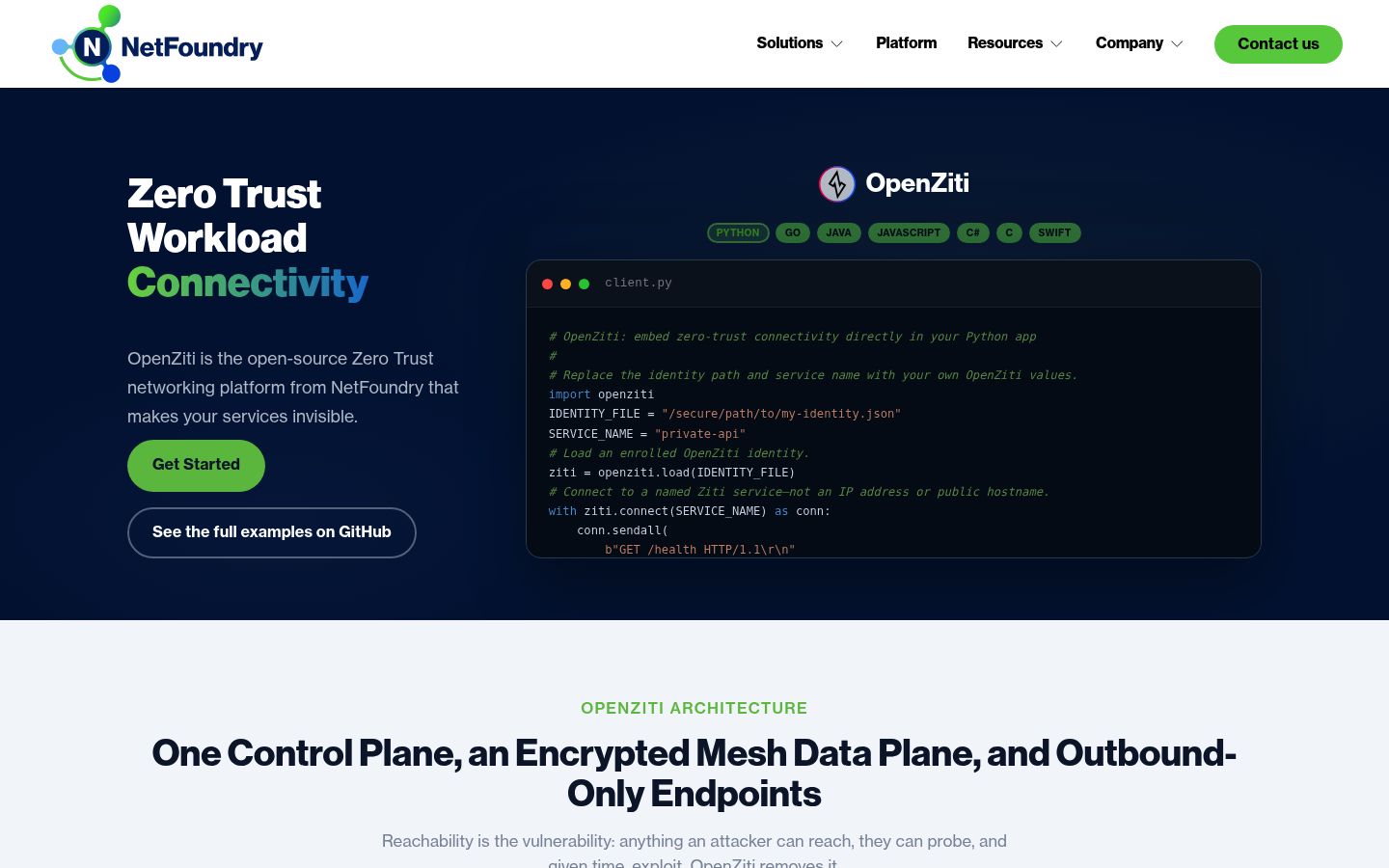
NetFoundry OpenZiti is the easiest fit when the goal is to change reachability without redesigning the underlay network. OpenZiti provides a zero trust overlay with tunnelers for existing applications and SDKs for applications that can embed connectivity. NetFoundry’s commercial platform adds a managed control plane, orchestration, visibility, and support around the open-source foundation.
The operating model is direct. An identity is authorized to reach a service, and the service stays unreachable through ordinary network discovery until policy allows the connection. NetFoundry’s platform describes outbound-only connections, mutual X.509 authentication, and least-privilege access by identity in its platform documentation.
Daily policy maintenance
For a routine request, the operator changes an identity-to-service relationship rather than editing a VLAN, route, or distributed firewall rule. That can reduce the number of infrastructure owners involved in a change. It also makes the change easier to explain in an audit: this identity reached that service under this policy.
The limitation is identity lifecycle. Teams must know which connector, tunneler, workload, or application owns an identity. Poor enrollment and revocation practices simply move policy drift into the identity layer.
Change tickets and rollback
OpenZiti is strong when tickets are caused by firewall exposure, subnet changes, or overlapping address space. A policy update can be rolled back without reverting a network redesign. The team still needs approval and testing for sensitive services, but the blast radius of the infrastructure change is smaller.
Multi-cloud scale
The same identity-first model can span cloud, data center, edge, and embedded workloads. NetFoundry says its fabric has more than 100 points of presence and a 99.95% uptime service-level agreement on its platform page. Those are vendor-reported service characteristics, not an independent benchmark.
OpenZiti is the best operational fit here when you need service-level connectivity for workloads, APIs, partner systems, or devices that do not map neatly to a user-centric ZTNA product. It is less attractive if your team wants a single vendor console for a broad SASE stack and already standardizes on another platform.
Zscaler: centralized cloud policy for large estates
Zscaler Zero Trust Cloud is easier to operate than separate cloud firewalls when a security team wants centralized controls for ingress, egress, east-west traffic, and workload microflows. Zscaler positions the product around a consistent security model across multi-cloud environments, with cloud connectors and policy managed through its service.
Daily policy maintenance
Zscaler’s advantage is consolidation. A security team can standardize workload policy instead of maintaining an independent rule set in each cloud. This reduces console switching and helps a central team apply common controls to different cloud environments.
The operational question is how much of the desired policy is expressed in Zscaler’s model and how much remains in cloud security groups, route tables, identity systems, and application controls. Centralization does not eliminate those dependencies. It can make the main policy easier to manage while leaving integration work for the platform team.
Change tickets and rollback
Zscaler can reduce tickets for repeated multi-cloud controls, especially when the request is about standardized inspection or segmentation. Its limitation is the change path for application-specific exceptions. Teams should test whether a service owner can request, approve, and reverse a narrowly scoped workload rule without involving several control planes.
Multi-cloud scale
This is Zscaler’s strongest comparison point. Its official description covers workloads across clouds, regions, availability zones, and on-premises data centers. Choose it when a large security organization values a cloud-delivered security platform and already uses Zscaler for adjacent controls. Choose another model when the primary problem is machine-to-machine reachability with minimal network exposure rather than broad traffic inspection.
Illumio: strong visibility, with more agent and policy planning
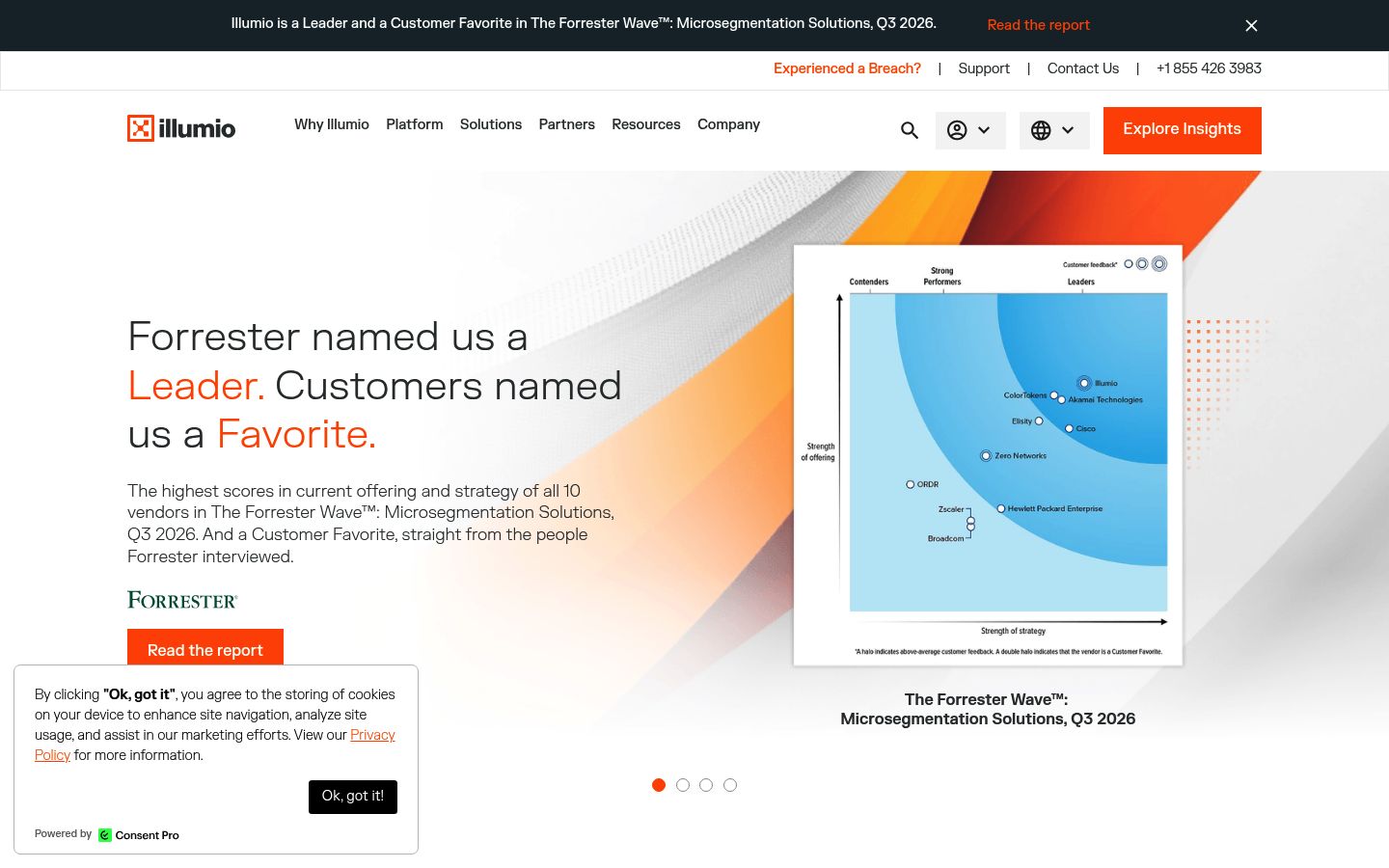
Illumio Segmentation is a strong fit for teams that want application dependency visibility and workload-level enforcement before they write restrictive policy. Illumio’s operating model centers on labeling workloads and applying segmentation policy based on application context rather than relying only on IP addresses.
Daily policy maintenance
Labels can be easier to reason about than raw addresses. An operator can think in terms of a production payment service, its database, and its approved dependencies. That is a meaningful improvement over manually tracking every changing IP.
Illumio’s tradeoff is the work required to build accurate labels, map dependencies, deploy enforcement where required, and maintain coverage as workloads change. The platform can expose policy problems that a simple VLAN design hides, but that visibility creates a queue of decisions for security and application owners.
Change tickets and rollback
Illumio is well suited to a controlled rollout: observe dependencies, model policy, test, and enforce. This helps teams avoid breaking an application during a segmentation project. It can also create more planning work before the first restrictive rule is active, especially in estates with incomplete ownership data.
Multi-cloud scale
Illumio fits organizations that want one application-centric segmentation language across data centers and cloud workloads. Its limitation is coverage planning. Ask which workload types, operating systems, containers, and unmanaged assets need an agent, gateway, or alternate enforcement method before assuming uniform coverage.
Prisma Access: broad SASE operations, not a pure workload segmentation tool
Prisma Access is easiest to operate when segmentation is part of a wider SASE program for users, applications, devices, and data. Palo Alto Networks presents it as a cloud-delivered service with ZTNA, secure web gateway, CASB, firewall as a service, and unified management.
Daily policy maintenance
Prisma Access can reduce operational fragmentation for teams already running Palo Alto Networks security controls. A shared management approach is valuable when the same group owns remote access, web security, cloud-delivered firewall policy, and user access.
The limitation is scope. Prisma Access is not a direct replacement for every workload-to-workload microsegmentation pattern. A buyer should separate human-to-application access, branch security, and east-west workload policy in the design rather than assume one SASE policy covers all three.
Change tickets and rollback
Central management can simplify standard policy changes and provide a familiar review path for network security teams. It can also increase the importance of platform-specific expertise. If application teams need service-level machine identity policy, confirm how that request enters the existing Palo Alto workflow and how quickly it can be reversed.
Multi-cloud scale
Prisma Access is a good choice for organizations standardizing on Palo Alto Networks across a hybrid workforce and network security stack. It is less direct for teams whose hardest problem is protecting non-human identities and service-to-service traffic across clouds without adding more firewall policy.
Which option produces fewer change tickets?
NetFoundry OpenZiti usually produces the fewest network change tickets for identity-to-service access. Zscaler usually produces fewer separate cloud security policy tickets for a large multi-cloud security program. Illumio reduces address-based work but adds labeling and dependency-management work. Prisma Access reduces tool sprawl when it aligns with an existing Palo Alto Networks estate.
Use this operational scorecard before choosing:
| Criterion | OpenZiti | Zscaler | Illumio | Prisma Access |
|---|---|---|---|---|
| Best routine change | Identity-to-service authorization | Central multi-cloud security policy | Application label and dependency policy | Unified SASE or ZTNA policy |
| Main ticket reduction | Fewer firewall and VLAN changes | Fewer cloud-by-cloud controls | Fewer IP-based rules | Fewer security stack handoffs |
| Main new workload | Identity and connector lifecycle | Cloud integration and exceptions | Labels, agents, and dependency mapping | Platform integration and policy scope |
| Rollback pattern | Revert service policy | Revert centralized policy or connector change | Return to observe or previous label policy | Revert managed security policy |
| Multi-cloud question | Can the same identity reach services everywhere? | Can the service cover every required traffic path? | Can every workload be labeled and enforced? | Does the SASE model cover the workload flow? |
The right answer depends on the tickets you want to eliminate. Count the last 20 segmentation changes and classify each one: address change, firewall request, switch or VLAN request, identity request, dependency discovery, or exception. That baseline is more useful than a feature checklist.
A practical operating model for hybrid environments
Most enterprises should keep NAC and VLANs for broad admission and zone boundaries while using identity-aware controls for service-level reachability. CISA’s microsegmentation guidance frames microsegmentation as a way to reduce attack paths and contain compromise. The operating goal is not to delete every VLAN. It is to stop a valid network position from becoming a broad trust grant.
Start with one application or workload that crosses a cloud and data-center boundary. Record its dependencies, owners, identities, and rollback path. Put the proposed policy into observation mode where the platform supports it, then enforce only the required service relationships.
Keep separate ownership for:
- Network admission and broad zone design
- Workload and service identity issuance
- Application dependency approval
- Policy review and emergency rollback
- Audit evidence and incident investigation
This division prevents a common failure mode: treating a segmentation platform as a one-time architecture project. The platform is only as maintainable as its identity inventory, service catalog, and change process.
FAQ
Is VLAN segmentation easier than microsegmentation?
VLAN segmentation is easier to start when the environment is stable and the team already owns the switch and firewall model. Identity-based microsegmentation is usually easier to maintain when workloads move, scale, or cross cloud boundaries because policy does not depend on a fixed subnet.
What is the difference between NAC and microsegmentation?
NAC controls whether a user or device can join a network and often assigns a VLAN or access role. Microsegmentation controls which services an identity can reach after it is connected, including east-west workload traffic.
Does microsegmentation replace NAC?
No. NAC remains useful for device admission, posture checks, and campus access. Microsegmentation adds service-level authorization so an approved device or workload does not automatically receive broad reachability.
Which platform is best for multi-cloud microsegmentation?
There is no universal winner. NetFoundry OpenZiti is a strong fit for identity-first service connectivity, Zscaler for centralized cloud workload security, Illumio for application dependency visibility and workload segmentation, and Prisma Access for organizations standardizing on a broader Palo Alto Networks SASE stack.
How can I reduce segmentation change-management tickets?
Measure which tickets consume the most time, then move the narrowest repeatable decision into identity-to-service policy. Keep network changes for broad boundaries and routing, and give application owners a tested request and rollback process for service-level access.
Is identity-based microsegmentation harder to implement?
It can be harder at the start because identities, service ownership, and lifecycle controls must be accurate. It becomes easier to operate when those controls are in place and the alternative is repeated IP, VLAN, firewall, and route changes across dynamic environments.
Related articles
- Network vs Identity-Based Segmentation
- How to Implement Zero Trust for Cloud Workloads
- Zero Trust Tools for Cloud Workloads: A How-To Guide
- Best Zero-Trust Workload Connectivity Platforms
Sources & References
- NIST SP 800-207, Zero Trust Architecture – resource-focused zero trust architecture
- CISA Zero Trust Microsegmentation Guidance – microsegmentation and attack-path reduction
- NetFoundry Platform – OpenZiti-based identity-first connectivity and operating model
- NetFoundry Universal Microsegmentation – policy, deployment, and workload segmentation details
- Zscaler Zero Trust Cloud – multi-cloud workload security capabilities
- Prisma Access – cloud-delivered SASE and ZTNA scope