
Webinar:
Securing Agentic AI"You go from the world's most attractive attack surface to something that doesn't exist unless you're identified, authenticated, authorized."
— Galeal Zino, NetFoundry CEO
Watch the Preview.
What’s in the webinar?
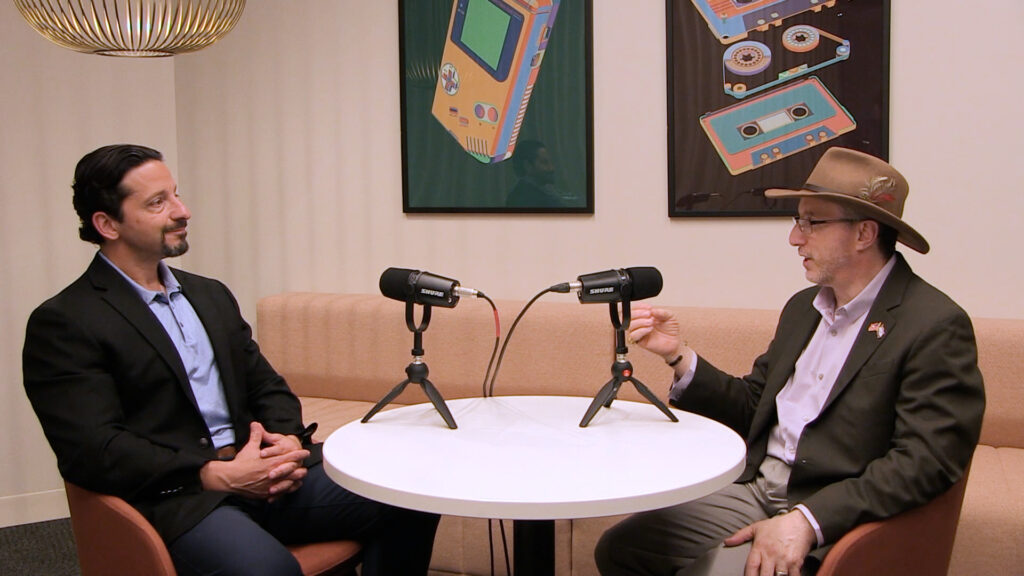
NetFoundry CEO Galeal Zino sits down with Jack Poller, principal analyst at Paradigm Technica, to unpack why legacy firewalls and human-centric identity models break down under agentic AI…and what has to replace them.
- “AI would melt those firewalls.” Why traditional perimeter security can’t even inspect agentic AI traffic, let alone control it.
- “Non-deterministic, unpredictable by design. That’s a feature, not a bug.” Why profiling “known good” behavior — the basis of most cybersecurity tools today — falls apart with AI agents.
- “We’ve taken 15 billion endpoints off the internet.” How making your AI/MCP gateway structurally invisible turns the world’s most attractive attack surface into a dead end.
It simply can’t be argued that the transition from static Large Language Models (LLMs) to autonomous, agentic AI frameworks is rendering legacy network and security architectures obsolete.
Learn more below.
See the webinar (including a full transcription) PLUS these demos:
- AI Security
- Site-to-Site (S2S) Demo
- Mergers and Acquisitions (M&A) Demo
- Healthcare Demo
- OT Product Builder Demo
- Server "Exposure Attack" Demo
You will NOT be contacted by a sales rep by filling out this form, you'll just be added to our newsletter.
Zero Trust Through Cryptographic Identities
To safely scale agentic AI, organizations must abandon IP-based access controls in favor of cryptographic identity and Zero Trust principles. By establishing an “AI fabric” or dark gateway, security teams can enforce strict, continuous authentication and authorization at the source, ensuring that the network remains completely invisible to unverified entities. This shift not only mitigates the risks of shadow AI and ephemeral autonomous workloads but also alleviates the unsustainable burden placed on IT and DevOps teams relying on manual network engineering to segment complex AI environments.
Legacy Firewalls Cannot Handle AI Workloads: Traditional firewalls are designed for human-speed traffic and deterministic applications. Subjecting them to the 24/7, high-volume traffic of agentic AI results in severe bottlenecks, leading organizations to bypass inspection entirely and expose their internal networks.
Identity Systems Must Evolve for Non-Human Entities: Current Identity and Access Management (IAM) systems are already struggling to handle human access. Scaling these broken, human-centric models to accommodate ephemeral, non-human AI agents is impossible, necessitating a shift toward distributed cryptographic identities.
Security Must Shift to a Proactive Zero Trust Fabric: Because agentic AI behavior is inherently non-deterministic, you cannot build security profiles based on known “good” states. Instead, organizations must implement foundational Zero Trust guardrails—authenticating and authorizing every connection before network access is granted, effectively making the attack surface “dark.”
Key Questions from Jack Poller
Mapping the AI Maturity Curve: Jack opens by asking Galeal to assess the current state of enterprise AI adoption and how organizations are balancing shadow AI with formalized corporate initiatives.
The Identity Crisis: Jack pivots to identity management, asking how IT and security teams can possibly manage the complex, ephemeral access requirements of AI agents using legacy systems designed for humans.
Securing the Unpredictable: Recognizing that agentic AI is non-deterministic, Jack challenges the traditional security methodology of profiling “known good” behavior, asking how to secure an environment when the applications’ actions are impossible to predict.
Challenging the Firewall Paradigm: Jack pushes back on Galeal’s points about firewalls, clarifying whether the enterprise is truly forced to completely abandon their traditional perimeter defenses for AI workloads.
The Threat of Machine Speed: Jack highlights the transition from prompt-based interactions to fully agentic workflows, questioning the implications of giving autonomous systems access to sensitive enterprise data at massive scale.