Step 7: Check the new identities

Neither alice nor bob existed in OpenZiti when the lab started. Each of them added the network by URL and signed
in. Nobody ran ziti edge create identity for either of them, but the controller has both now:
Showing steps as:
- ziti CLI
- ZAC
$ ziti edge list identities
│ NAME  │ ATTRIBUTES  │ AUTH-POLICY │
│ alice │ engineering │ acme-users  │
│ bob   │ hr          │ acme-users  │
Under Identities, alice and bob appear with the roles from their IdP groups:
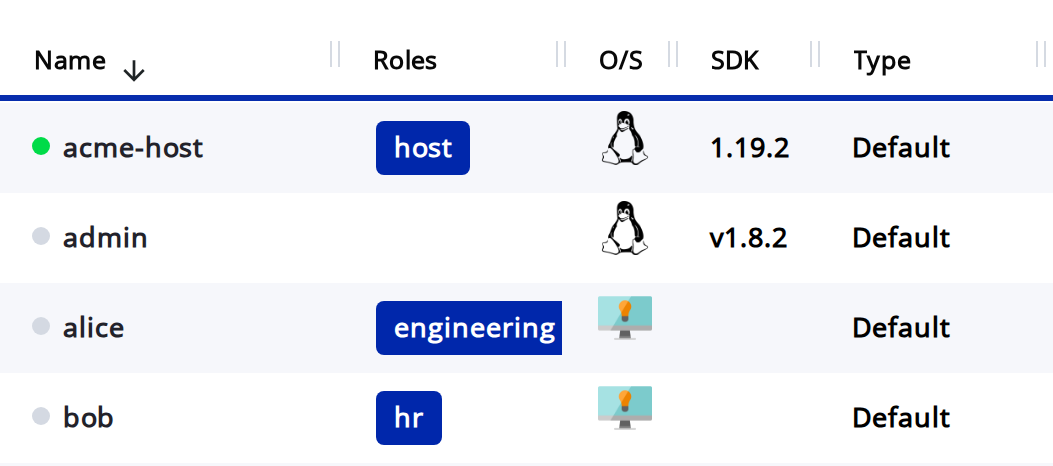
The policy advisor shows which services each identity is allowed to dial or bind:
$ ziti edge policy-advisor identities -q alice
OKAY : alice (1) -> eng-wiki (1) Common Routers: (1/1) Dial: Y Bind: N

$ ziti edge policy-advisor identities -q bob
OKAY : bob (1) -> hr-portal (1) Common Routers: (1/1) Dial: Y Bind: N
Nobody typed those attributes. The controller copied them from the groups claim in the user's IdP token when it
created the identity.
What to know
- Attributes based on IdP groups are currently only added to the OpenZiti identity once, at enrollment time. If you
add
alicetohrin Keycloak andalicethen enrolls on a second device,alicestill has only theengineeringattribute. OpenZiti does not sync group state between the IdP and OpenZiti. The NetFoundry platform offers that sync as an enterprise feature through SCIM. - A user with no groups can still enroll. They just get no attributes assigned automatically. If your service policies use attributes to control access, that identity has no services by default. This follows the zero trust least privilege ethos. Every identity starts with no access and is granted only the access it needs.
Done when
aliceandbobeach have an identity with theacme-usersauth policyalicehas theengineeringattribute andbobhashr, the groups they had when they enrolled